Revolutionary Telesurgery Connects Wuhan and Athens
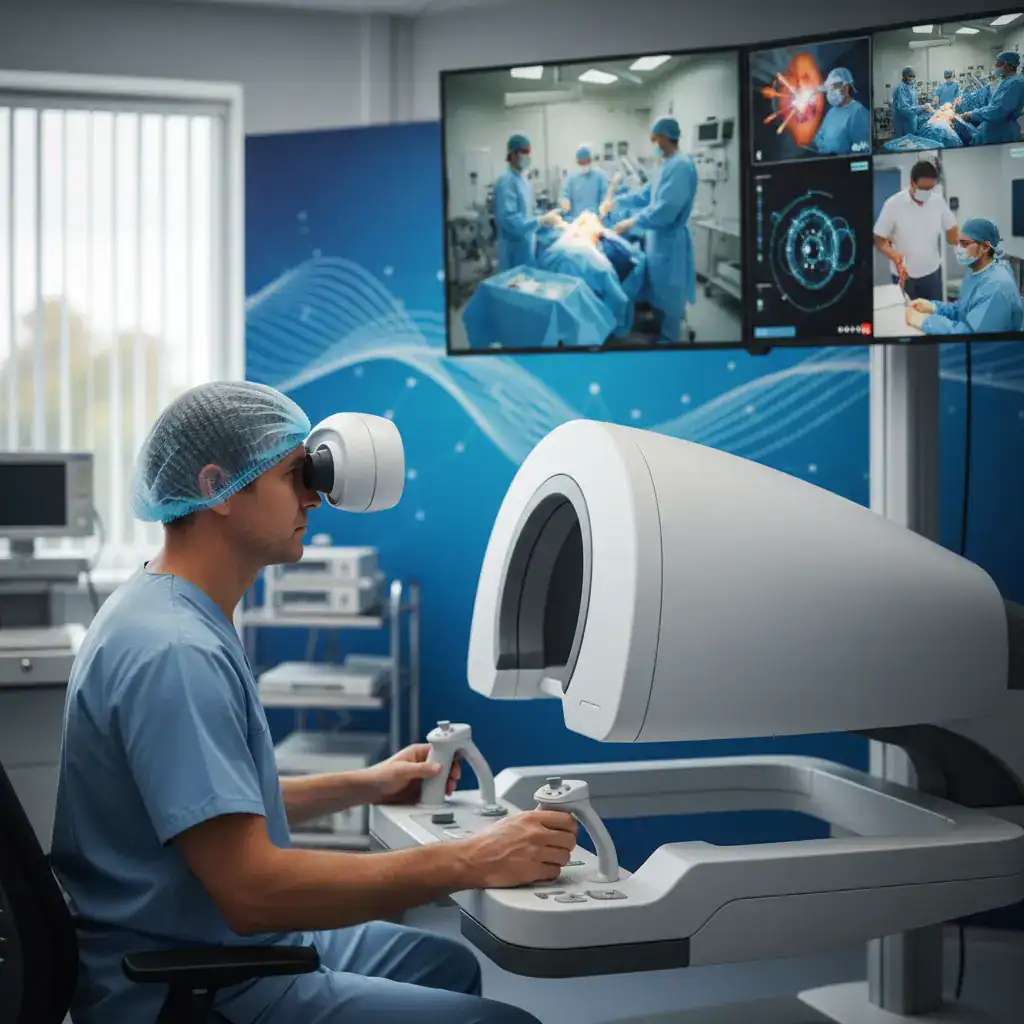
Athens, May 29, 2026 – In a groundbreaking achievement for medical science, a professor from the University of Patras successfully performed a robotic prostatectomy on a patient in Athens while being located 8,000 kilometers away in Wuhan, China. This pioneering procedure marks a significant milestone in the field of telesurgery and robotic medicine.
The intricate operation was carried out by Evangelos Liatsikos, Professor of Urology at the University of Patras and Director of the Urology Clinic at Rio Hospital. Professor Liatsikos utilized a specialized robotic system to complete the robotically assisted prostatectomy on a patient hospitalized at “Lefkos Stavros – The Athens Clinic.”
How Telesurgery Works: Bridging Distances in Medicine
Telesurgery, the method employed in this procedure, enables a surgeon to operate from a considerable distance. It leverages advanced robotic tools and secure communication networks that transmit the surgeon’s movements in real-time. This technology allows for expert medical intervention regardless of geographical barriers, opening new possibilities for patient care in remote or underserved areas.
The successful completion of this operation is considered immensely important for the evolution of telesurgery. It demonstrates the transformative potential of technology in medicine, showcasing how it can effectively bridge vast distances to deliver critical healthcare services.
The Impact on Medical Future
This achievement highlights the growing capabilities of remote medical procedures and the potential for a global network of specialized surgical expertise. The ability to perform complex surgeries from thousands of kilometers away could revolutionize access to highly specialized medical care, particularly in situations where a patient cannot travel or a specific surgeon’s expertise is not locally available.
Medical experts believe that such advancements will lead to further development in robotic systems and communication technologies, making telesurgery a more common and accessible option in the future. This could significantly impact global health by democratizing access to advanced surgical techniques.
The success of Professor Liatsikos’s operation underscores Greece’s position at the forefront of medical innovation within Europe and globally. It serves as an inspiration for future research and development in the fields of robotics, telecommunications, and medicine, promising a future where geographical distance is no longer a barrier to receiving life-saving treatments.