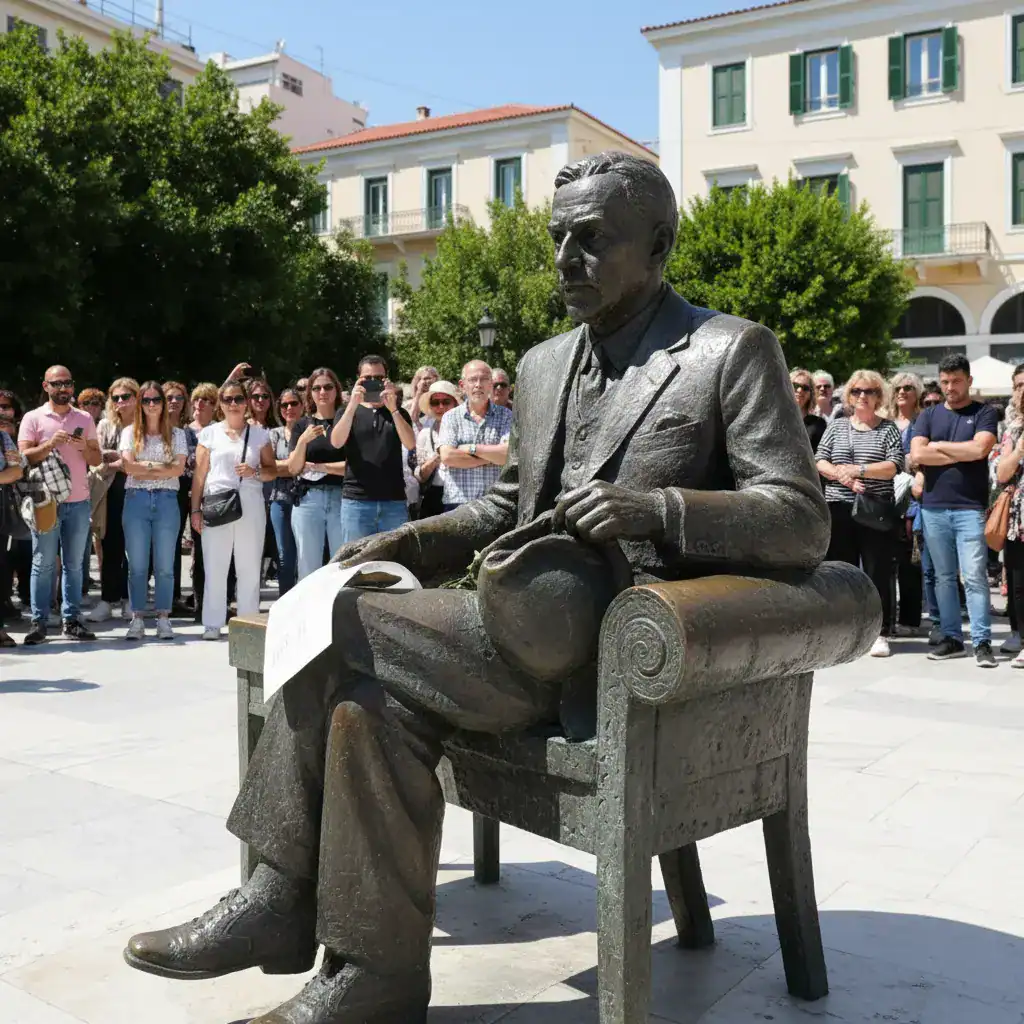
Athens, May 1 – Constantine P. Cavafy, the renowned Alexandrian Greek poet, now holds a permanent place on Athens’ famous pedestrian street, Dionysiou Areopagitou. A life-sized bronze sculpture of Cavafy, seated on a park bench, was unveiled yesterday, inviting residents and visitors to sit alongside him.
A Unique Monument on a Historic Walkway
The sculpture, a donation from the Onassis Foundation to the City of Athens, was created by sculptor Praxiteles Tzanoulinos. It is strategically placed in front of the Onassis Library and the Onassis Mandra, symbolizing the intersection of ancient Greek heritage and contemporary cultural life through one of Greece’s most revered literary figures.
Unlike traditional monuments that often place their subjects on pedestals, this sculpture is designed for direct human interaction. This intimate approach transforms an encounter with a historical literary figure into a conversational and immediate experience, encouraging engagement from the public.
Craftsmanship and Durability
Mr. Tzanoulinos cast the figure in bronze, utilizing a high-durability patina. This choice of material and finish ensures the sculpture’s resilience against the demands of a busy outdoor thoroughfare, allowing it to withstand constant public interaction and environmental factors.
Symbolic Homecoming for Cavafy
Constantine P. Cavafy, born in Alexandria in 1863, was deeply influenced by the Greek diaspora experience. He never resided in Athens, making the placement of his likeness on the slopes of the Acropolis a profoundly symbolic act. This installation serves as a homecoming, firmly anchoring his legacy at the heart of the city and culture that he wrote about and towards, despite never having lived there.
The unveiling ceremony was attended by representatives from the Onassis Foundation, city officials, and members of the cultural community, marking a significant moment for Athens’ public art landscape and its connection to Greek literary heritage.
The initiative aims to enrich the urban environment, offering both a cultural landmark and a space for reflection. The sculpture’s accessible design encourages a new form of public engagement with art and literature, fostering a sense of connection between the past and present, and between the poet and his admirers.
This addition to Dionysiou Areopagitou Street is expected to become a popular spot for both locals and tourists, further enhancing Athens’ reputation as a city rich in history, culture, and artistic expression. It stands as a testament to Cavafy’s enduring influence on Greek literature and his universal appeal.