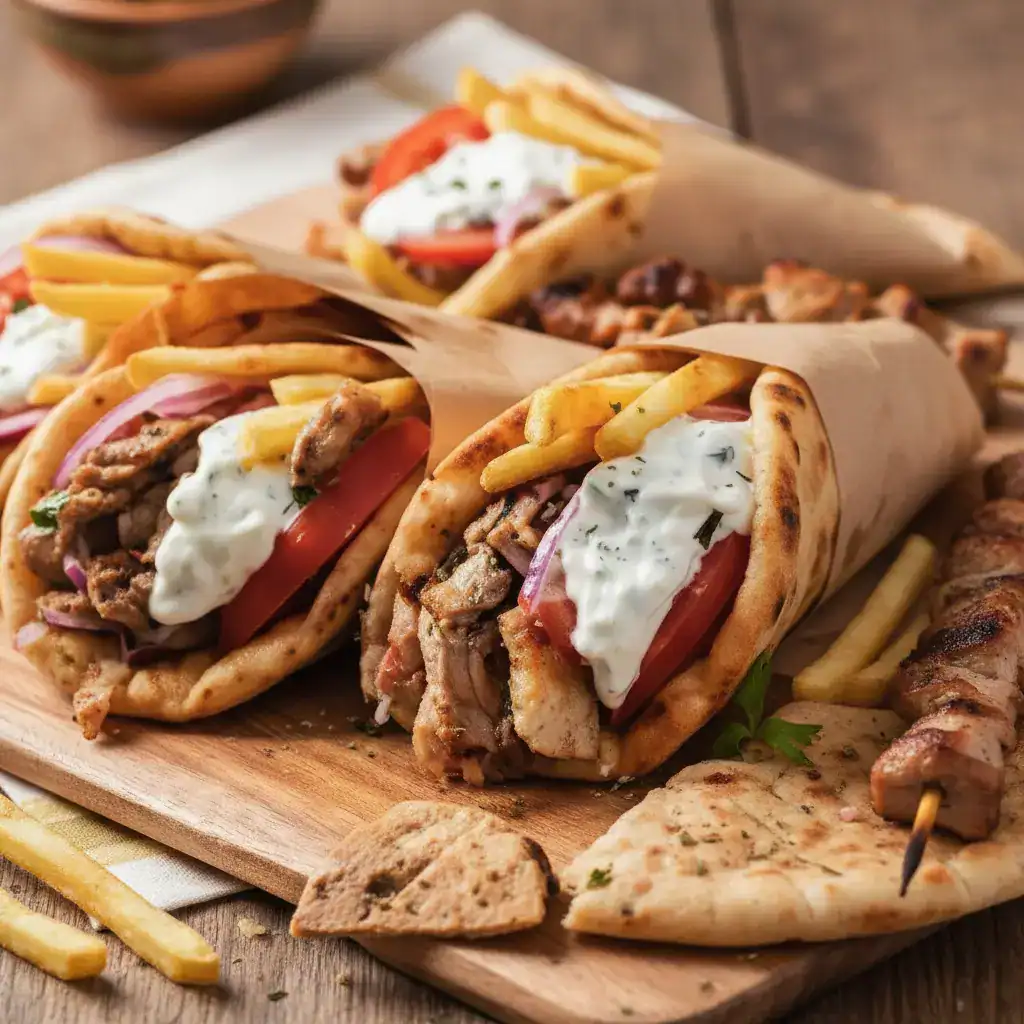
Souvlaki’s Transformation: From Affordable Staple to Costly Treat
ATHENS, May 1, 2026 – The humble souvlaki, long celebrated as Greece’s quintessential cheap and cheerful street food, is undergoing a significant transformation, evolving into a more costly indulgence. Recent market data reveals a stark increase in prices, challenging its traditional status as an accessible meal for all.
Significant Price Hikes Across Greece
Reports indicate that the price of a classic souvlaki in certain areas of Athens has now surpassed the €5 mark. In popular tourist destinations, such as the picturesque island of Santorini, this beloved dish can command prices as high as €7. This represents a considerable jump from just a few years ago, when the same meal was typically available for around €2.50, making it a go-to for budget-conscious diners.
Underlying Factors Driving the Price Surge
The escalating cost of souvlaki is not an isolated phenomenon but rather a reflection of broader economic pressures impacting the Greek economy. Several key factors are contributing to this upward trend:
- Increased Raw Material Costs: The prices of essential ingredients such as meat, cooking oils, and fresh vegetables have seen substantial increases.
- Rising Energy Prices: The cost of energy, which impacts everything from food production and transportation to storage and restaurant operations, continues to climb.
- Higher Operating Expenses: Businesses are grappling with increased overheads, including wages, rent, and other operational expenditures.
- Persistent Inflation: Inflationary pressures across the entire supply chain are consistently pushing prices higher.
Industry experts emphasize that this change is not the result of a sudden, dramatic spike but rather a series of steady, cumulative increases that have now reached a point where they can no longer be absorbed by vendors without passing them on to consumers.
Impact on Everyday Habits and Consumer Choices
The shift in souvlaki pricing has a direct and noticeable impact on the daily lives and spending habits of Greeks. What was once an easy, inexpensive snack or quick meal is now less accessible for many. A typical family order of souvlaki can now easily exceed €40, placing its cost closer to that of a full sit-down meal at a mid-range restaurant.
This change is felt more acutely than price increases in higher-end dining, as it affects an everyday staple. When basic, affordable foods become expensive, it directly impacts household budgets and daily routines, rather than just occasional discretionary spending.
Future Outlook: Further Increases Anticipated
Officials within the food service industry caution that if the costs of energy and raw materials continue their upward trajectory, further price increases for souvlaki are highly probable. This ongoing trend suggests that souvlaki is gradually losing its long-held status as Greece’s quintessential “cheap food.” It is slowly transitioning into the category of a moderately priced, but no longer an everyday, budget-friendly option.
The broader implication extends beyond souvlaki itself: inflation is no longer merely an abstract statistical figure but a tangible reality that is reshaping everyday habits and making even the simplest meals a more complex financial consideration for Greek consumers.