In a period characterized by the “unreliability and turmoil” of American foreign policy under “Trump 2.0,” European nations are increasingly seeking solutions through more flexible, smaller formations, often dubbed “coalitions of the willing.” This shift is particularly evident in the deepening strategic alignment between Athens and Paris, as they seek to bolster their security in the Eastern Mediterranean, a region bordering the volatile Middle East.
Franco-Hellenic Alignment: A Bulwark Against Instability
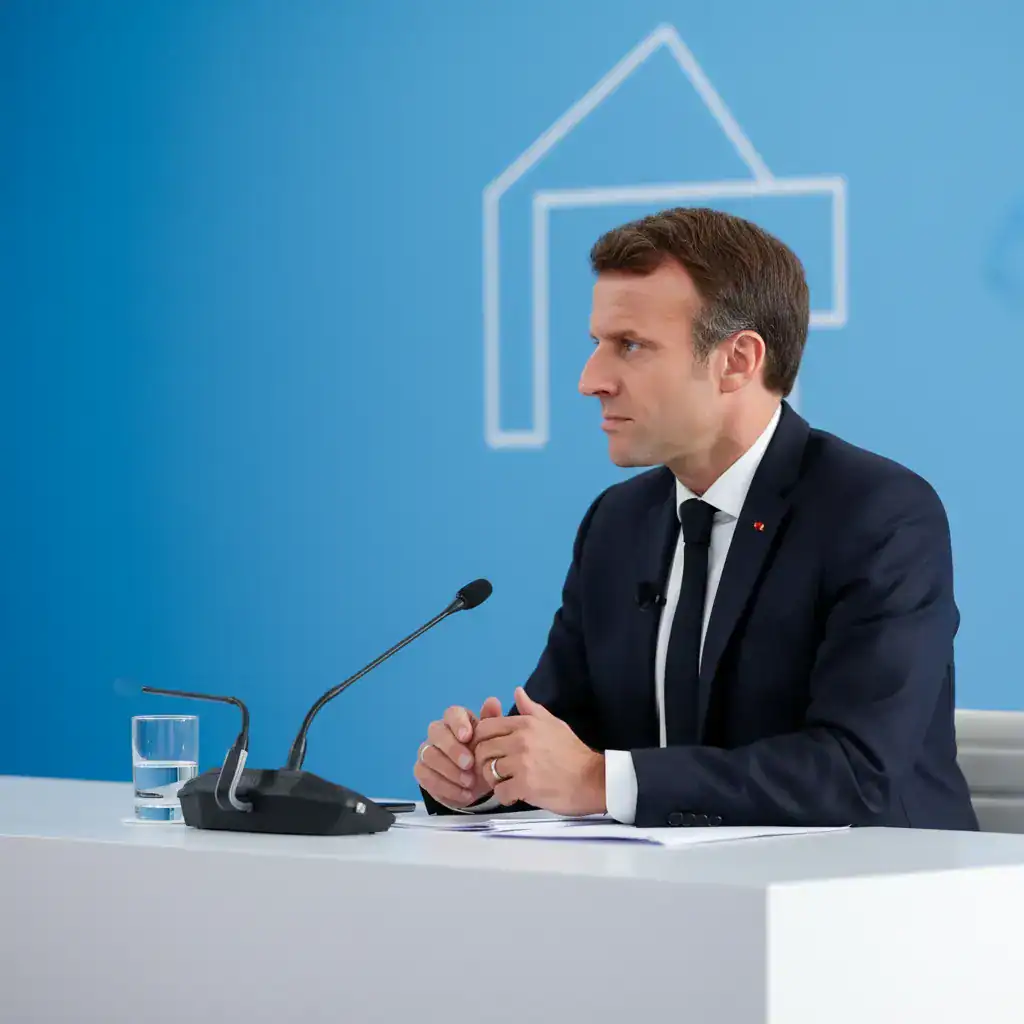
French President Emmanuel Macron’s upcoming visit to Athens, immediately following the Cyprus Summit on April 23-24, is poised to be a pivotal moment. The highlight of this visit will be the signing of the renewed Franco-Hellenic defense agreement, which includes an enhanced clause for assistance should either party face an attack on its territory. This move is seen by the Mitsotakis government as a recognition of France’s role as Greece’s most reliable partner, both diplomatically and on the ground.
This reliability was demonstrably proven during the tense summer of 2020, when a potential armed conflict between Greece and Turkey loomed off the coast of Kastellorizo. More recently, the French aircraft carrier “De Gaulle,” accompanied by other warships, was deployed off the coast of Cyprus to protect the island from Iranian threats, acting in concert with Greek forces.
Amidst the ongoing third war in the Persian Gulf, Greece and France are not only defending their own interests in the wider region but are also emerging as security providers for third parties, while simultaneously spearheading the development of a robust European defense. Both Athens and Paris share common ground on addressing pressing EU issues, including migration, energy independence, and regional crises in Lebanon, Syria, and Libya. The shared vision of Messrs. Mitsotakis and Macron is expected to be articulated in their public statements this coming Saturday.
The Challenge of the Strait of Hormuz
Behind the scenes, ambitious discussions are underway regarding the creation of a formidable naval force to ensure the security of navigation in the Strait of Hormuz. This initiative, with a leading role played by Great Britain and France, comes after the painful closure of Hormuz, which drew sharp criticism from Donald Trump. Kir Starmer and Emmanuel Macron, who met last Friday in Paris, convened a teleconference of leaders on the Strait, with the participation of Mr. Mitsotakis.
As previously reported by “To Vima,” Macron had pressed the Greek Prime Minister during his presence in Paphos for Greece to participate in the planned operation. Athens has since set the definitive cessation of hostilities in Iran as an indispensable precondition for its involvement. Diplomatic sources indicate that while discussions have taken shape, they are still in their early stages.
However, an official close to the Maximos Mansion told “To Vima” that, “in principle, we are in favor of a mission, with the presence of as many forces as possible, but under the auspices of the European Union or the UN.” It is worth noting that efforts to institutionally safeguard the Hormuz initiative through the UN Security Council ultimately failed due to objections from Russia and China.
It remains to be seen whether a European mandate will indeed be issued, similar to Operation ASPIDES, in which a Greek frigate has been participating since early 2024. It is almost certain that this issue will be a key topic in the Mitsotakis-Macron tête-à-tête, with the French President expected to publicly articulate his positions.
Conflict as an Accelerator for European Defense
In a parallel development, the “27” European leaders will convene next Thursday in Ayia Napa, a few kilometers from the occupied Famagusta, in the last European state that remains divided under Turkish occupation. In a reversal of history, the territory of the Republic of Cyprus, historically imbued with symbolism, recently served as a testing ground for a “coalition of the willing,” as the Greek and French missions were followed by Italy, the Netherlands, Great Britain, and Germany – the latter detaching a warship from a UN peacekeeping mission.
According to then-President of Cyprus Nicos Anastasiades, Nicosia and Athens essentially activated, albeit partially, Article 42.7 of the EU Treaty concerning defense assistance to a member state under attack. Is this type of ad hoc formation the future of European defense? “In practice, the collective defense of the ’27’ and the more flexible formations of the willing, i.e., those whose interests are affected on a case-by-case basis, will coexist, without however negating the general obligation of European solidarity,” a senior diplomatic source told “To Vima,” highlighting Athens’ position ahead of the Summit.
“Defense autonomy is a priority of the Cypriot presidency of the EU, but Nicos Christodoulides will once again raise the issue of 42.7 with partners, as in addition to developments in the Middle East, what concerns us most is the continuous Turkish threat,” notes an informed source from Nicosia, in the wake of Ankara’s targeting of Greece and Cyprus due to their strategic cooperation with Israel.
However, as the informal Summit will not issue an official text, the aim will be to delineate the political framework, based on the April 2024 Conclusions, with Nicosia seeking specific formulations for the EU’s energy security, with the memory of the Turkish intervention that led to the suspension of the Greece-Cyprus electricity interconnection project remaining fresh. “We could not abstain from the discussion on 42.7,” a government official told “To Vima,” attempting to link the issue more to the instability in the wider region than to the Turkish threat. From Ayia Napa, however, Mr. Mitsotakis will once again sound the alarm: just as Europeans are rushing to protect the east, they must do the same for the southern borders of the Union.
Source: https://www.tovima.gr/print/diplomatia/to-menou-makron-stin-athina/