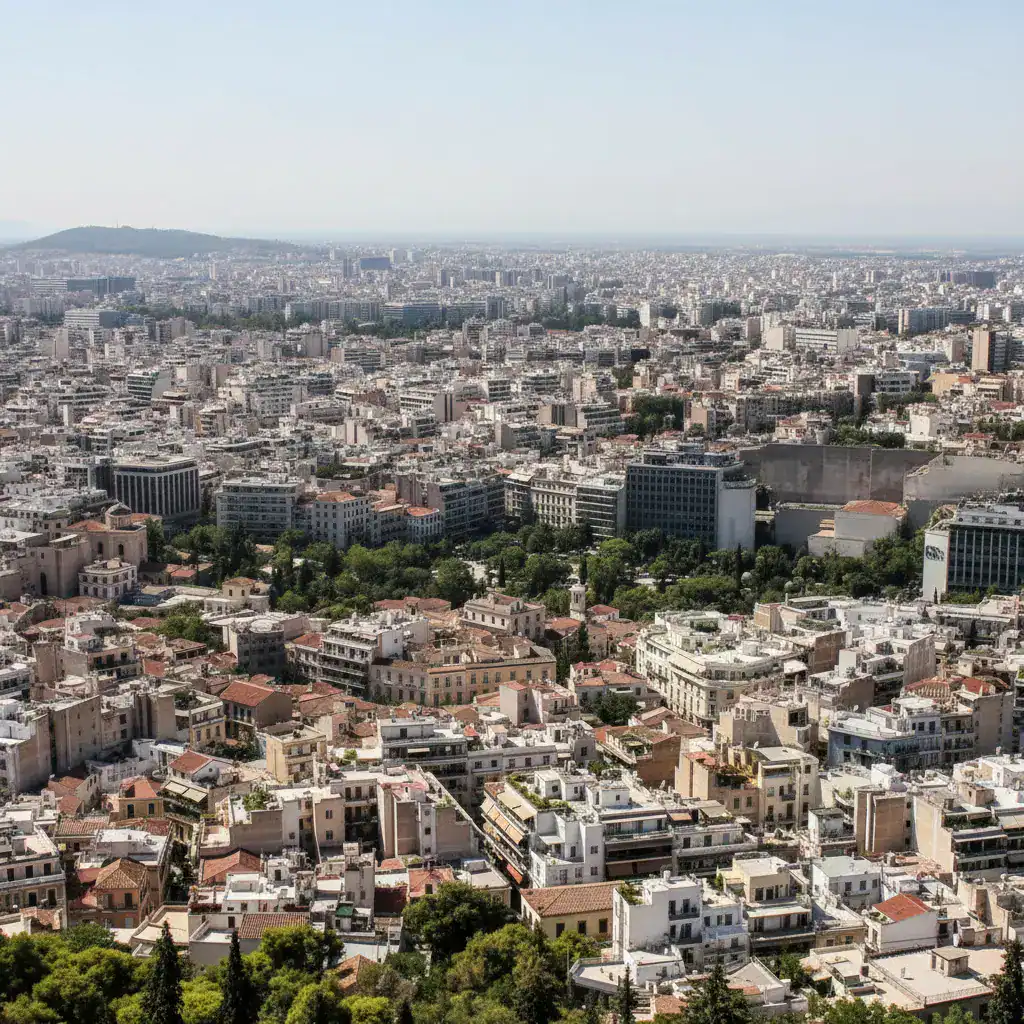
Athens, April 14 – A comprehensive new urban plan for Athens has been submitted to the Environment Ministry, highlighting critical concerns about the city’s severe densification and proposing concrete measures to address it. The study, prepared by a consortium of three firms led by Konstantinos Lalenis, a professor of Urban Planning at the University of Thessaly, concludes that Athens, characterized by its densely built environment and insufficient public and green spaces, cannot sustain further construction.
Key Proposals to Combat Densification
The core of the new plan centers on two primary strategies: lowering building coefficients and increasing minimum plot sizes. These measures are designed to gradually alleviate the immense pressure on the city’s urban fabric. Rather than implementing across-the-board reductions, the plan advocates for targeted adjustments to smooth out irregular coefficients, protect smaller plots, and minimize overall densification.
The plan also designates limited development zones, which will operate under state incentives and stricter regulations. This approach aims to preserve residential areas currently facing significant tourist pressure, such as Koukaki and Makrygianni, by controlling the intensity of tourism development. Additionally, unbuilt plots within the city could be repurposed for essential public uses, such as parking facilities, to better serve the needs of residents and visitors.
Integrated Policy Frameworks and Specific Initiatives
The urban plan is not a standalone document but integrates 13 overlapping policy frameworks. These include critical areas such as climate adaptation, mobility, economic growth, tourism management, and flood control, demonstrating a holistic approach to Athens’ urban challenges. This multi-faceted strategy aims to create a more resilient and sustainable city for its inhabitants.
Specific initiatives outlined within the plan include focused development on districts like Elaionas, with a strong emphasis on promoting social housing projects. Furthermore, the plan proposes the relocation of nine ministries from the congested city center to other areas, a move intended to decentralize administrative functions and reduce traffic and population density in the heart of Athens.
Addressing the Impact of Tourism
A significant aspect of the new urban plan is its focus on managing tourism intensity. By implementing ‘tourism intensity control’ zones, the plan seeks to limit unsustainable tourism practices that contribute to the overdevelopment and strain on local resources. This measure is crucial for maintaining the quality of life for residents while ensuring the long-term viability of Athens as a desirable tourist destination.
Wider Environmental and Urban Context
This initiative comes at a time when Athens is actively pursuing various urban renewal projects. Recent efforts include plans to reopen a main avenue, the restart of a long-stalled project on the Faliro seafront, and discussions around limiting height bonuses in suburbs like Kifissia. These concurrent projects underscore a broader commitment to improving the urban environment and addressing the challenges posed by rapid development and population growth.
The new urban plan represents a critical step towards a more sustainable and livable Athens. By prioritizing a balanced approach to development, managing tourism, and integrating various policy frameworks, the city aims to mitigate the adverse effects of densification and enhance the quality of urban life for its residents.
Source: https://www.ekathimerini.com/news/environment/1300714/urban-plan-targets-athens-densification/