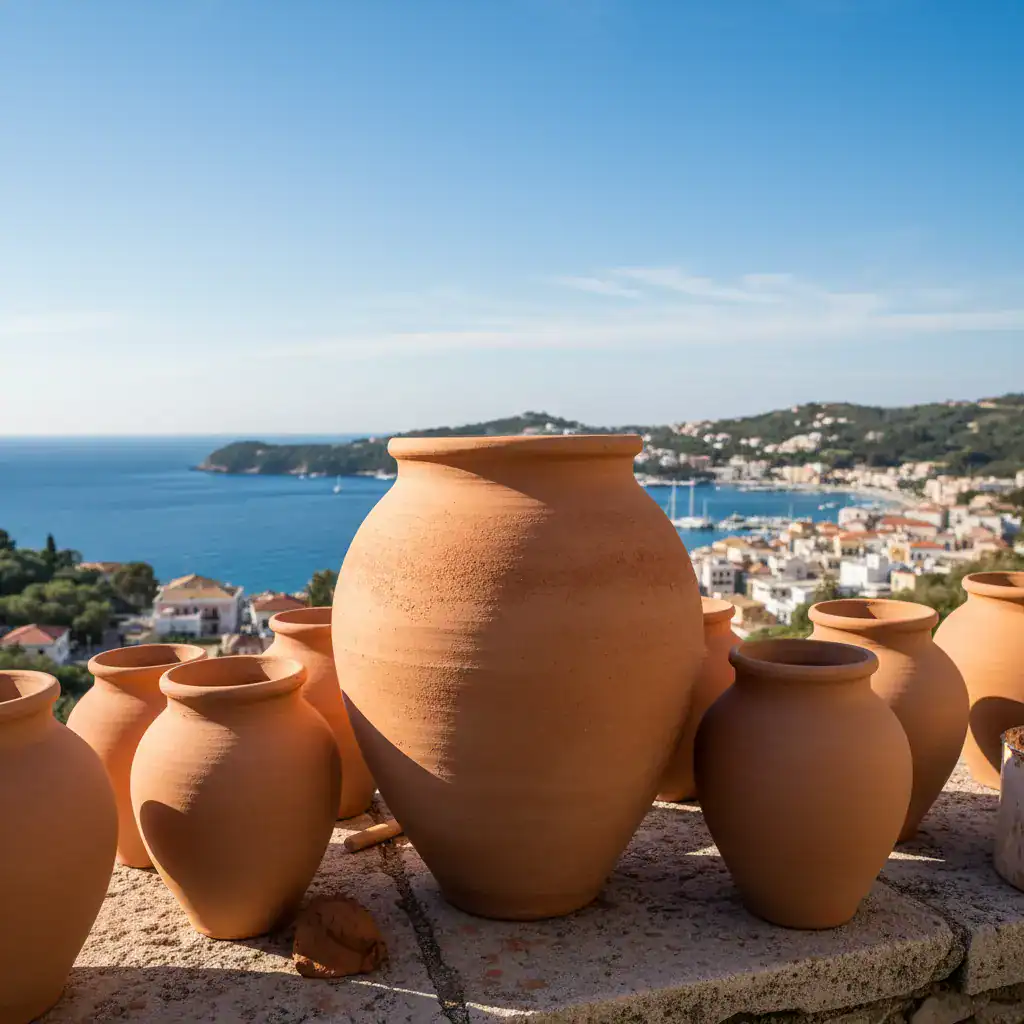
The scent of clay dust hangs in the air, a familiar aroma that has filled the workshop of Kostas Panaretos for 44 years. With hands weathered by time and countless hours at the potter’s wheel, Panaretos meticulously shapes the clay, transforming it into the iconic ‘Botides’ – the earthenware pots that are central to Corfu’s most spectacular Easter tradition. It’s early April 2026, and the island is already buzzing with anticipation for the Holy Week, a period when Corfu truly comes alive, drawing visitors from across the globe to witness its unique customs.
The Echo of Renewal: Corfu’s ‘Botides’ Tradition
Every Holy Saturday morning, the historic center of Corfu transforms into a vibrant spectacle. Thousands of clay pots, ranging in size, are hurled from balconies, crashing onto the streets below with a deafening clamor. This thunderous event, known as ‘Botides,’ is more than just a noisy display; it’s a deeply symbolic ritual, rooted in the island’s rich cultural tapestry. It represents the renewal of life, the casting away of evil, and ushers in the joyous celebration of the Resurrection.
For Panaretos, this tradition is not merely a job; it is his art, his legacy. “This is my art,” he shared with ERT3’s “Perimetros” program, his voice resonating with pride. “There is demand because we have many people, visitors, and they take them for breaking or as souvenirs.” His dedication is evident in every pot he creates, each one hand-decorated and painted, a testament to the enduring craftsmanship that defines this ancient practice.
A Potter’s Dedication: Crafting Tradition Since October
The creation of the ‘Botides’ is a year-round endeavor for Panaretos. “From October, November, we start, and I make around 300 pieces in total, in various sizes, small and large,” he explained. This meticulous preparation ensures that when Easter arrives, there are enough pots to meet the demand of both locals and tourists eager to participate in this unique custom. Each pot carries with it not just the clay and paint, but also the spirit of Corfu’s heritage, a tangible link to generations past.
The tradition of ‘Botides’ is believed to have ancient roots, possibly stemming from Venetian influences or even earlier pagan rituals. Over centuries, it has evolved into a distinctly Corfiot celebration, a powerful expression of community and faith. As the pots shatter, they are said to ward off evil spirits and welcome the new beginnings that Easter symbolizes. The sound of their breaking reverberates through the narrow streets, a symphony of tradition that captivates all who witness it.
More Than Just Pottery: A Symbol of Identity
For the residents of Corfu, the ‘Botides’ are more than just earthenware; they are an integral part of their identity. The tradition fosters a sense of belonging and continuity, connecting them to their ancestors and to the unique spirit of their island. Visitors, drawn by the allure of this extraordinary spectacle, become part of this living history, experiencing firsthand the vibrant culture that makes Corfu so special.
As Holy Saturday approaches, the excitement builds. Balconies are adorned, and the air crackles with anticipation. When the moment arrives, and the first pot is cast down, a collective gasp and cheer rise from the crowds below. It is a moment of shared experience, a celebration of resilience, and a powerful affirmation of life. And at the heart of it all, quietly working in his studio, is Kostas Panaretos, the guardian of a tradition that continues to shape the soul of Corfu.
The ‘Botides’ tradition, with its blend of ancient symbolism and vibrant community participation, remains a cornerstone of Corfu’s Easter celebrations. It is a testament to the power of cultural heritage and the dedication of individuals like Kostas Panaretos, who ensure that these unique customs continue to thrive for generations to come.
Source: https://www.ertnews.gr/video/kerkyra-paradosiako-ergastirio-ftiaxnei-mpotides-gia-tin-proti-anastasi/?amp