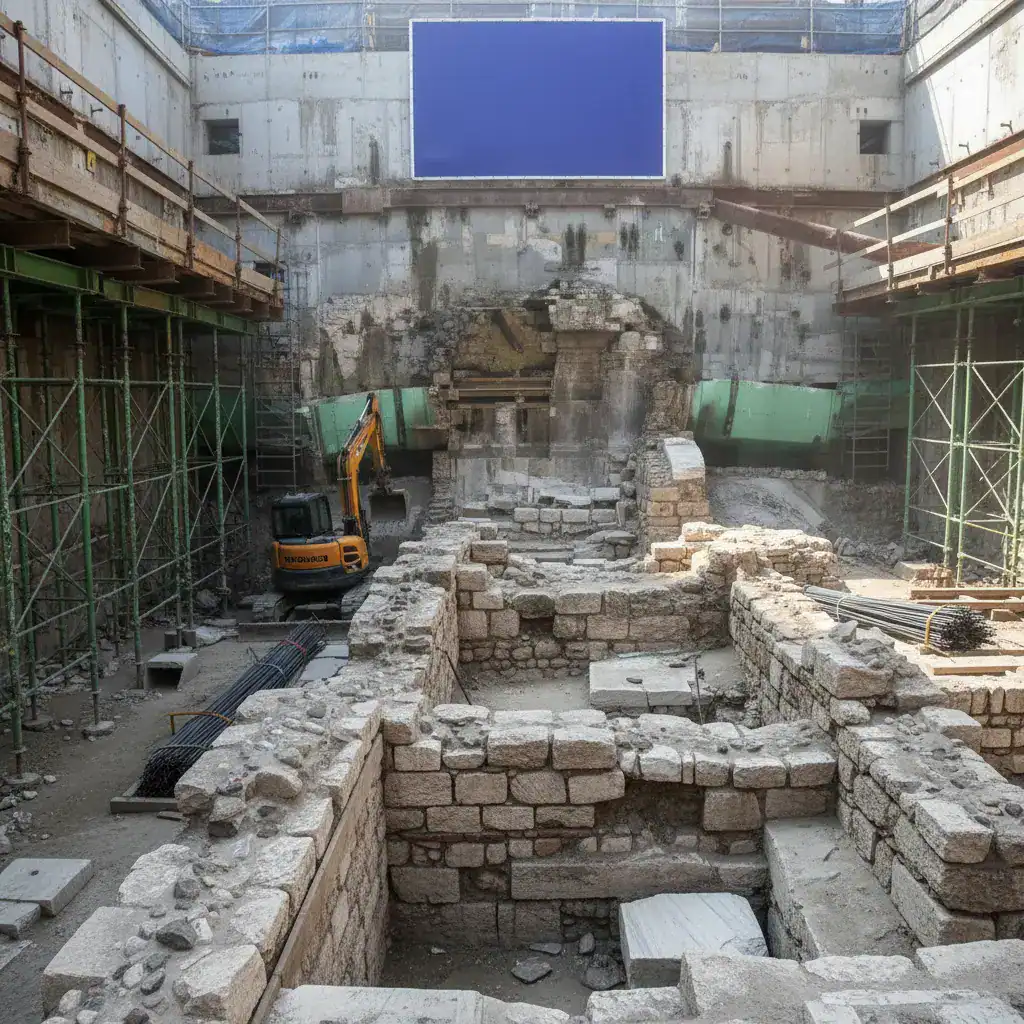
The saga of Athens’ Metro Line 4 continues to unfold, painting a stark picture of a project plagued by persistent delays, escalating disputes, and a growing sense of frustration. What was once envisioned as a transformative artery for the Greek capital has become a symbol of bureaucratic inertia and contractual wrangling, with its completion now pushed back to 2032 at the earliest – and more realistically, 2034.
A Timeline in Flux: From Optimism to Arbitration
The latest blow came in February 2026, when Elliniko Metro, the project overseer, set a new delivery date of September 2032. However, the construction consortium – a joint venture comprising AVAX, Ghella SpA, and Alstom Transport SA – swiftly challenged this, deeming the timeline unachievable. Their counter-proposal, extending the contract to February 2034, highlights a fundamental disagreement over the project’s feasibility and the underlying causes of its sluggish progress.
This isn’t merely a matter of revised schedules; it’s a deep-seated conflict that has spiraled into arbitration. This process, historically favoring contractors in disputes with the Greek state, casts a long shadow over the project’s future, suggesting that the path to completion will be anything but smooth.
The Blame Game: Who is Accountable?
As the delays mount, so too does the finger-pointing. Elliniko Metro has publicly accused the consortium of artificially inflating construction timelines for one station by a staggering 21.5 months. This accusation, if proven true, suggests a deliberate attempt to extend the project’s duration, potentially for financial gain.
Conversely, the consortium undoubtedly has its own grievances, likely pointing to unforeseen challenges, bureaucratic hurdles, or perhaps even design changes imposed by Elliniko Metro. The lack of transparency surrounding the detailed reasons for these delays only fuels speculation and undermines public trust.
Dr. Eleni Papadopoulou, an expert in public works management at the National Technical University of Athens, comments, “Such protracted disputes are unfortunately common in large-scale infrastructure projects in Greece. The lack of clear accountability mechanisms and robust risk-sharing frameworks often leads to these blame games, ultimately harming the taxpayer and delaying essential public services.”
The €57.7 Million Question: A Bonus Under Scrutiny
Adding another layer of complexity to this already tangled web is the demand from Elliniko Metro for the consortium to return a €57.7 million early-delivery bonus. This substantial sum, representing 5% of the €1.15 billion contract, was paid in late 2022, ostensibly as an incentive for timely completion. The fact that this bonus is now being clawed back underscores the severity of the delays and raises serious questions about the initial assessment of the project’s timeline and the efficacy of such incentive schemes.
The Minister of Infrastructure’s decision to defer this repayment