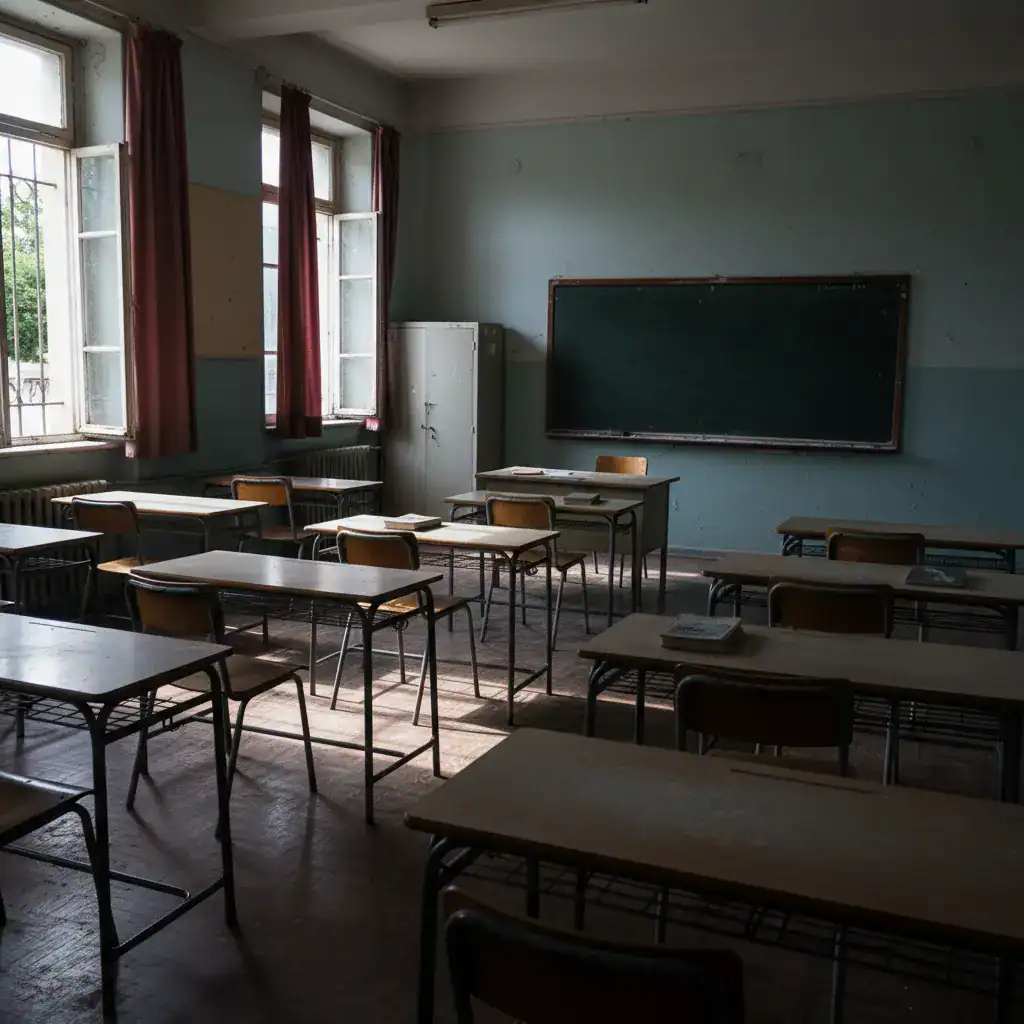
Corfu Schools Face Deliberate Understaffing: A Policy Choice, Not an Accident
The recent teacher transfers in Primary Education have starkly confirmed what educators in Corfu experience daily: the government and the Ministry of Education view public education as a cost, not a social right. Corfu is losing 87 teachers and gaining only 14, a predetermined outcome leading to even greater understaffing, more vacancies, and increased pressure on students and educators alike. This situation, far from being an unforeseen consequence, is a deliberate policy choice, deeply impacting the island’s educational landscape.
The Unfolding Crisis: Vacancies and Inadequate Support
Just two months before the end of the school year, the extent of the crisis is evident:
- Vacancies for PE70 teachers persist in morning operations (10th, Gastouri, Kanalia, Agios Matthaios Primary Schools) and all-day schools (Petriti, Spartyla Primary Schools).
- There are severe shortages of PE06 English teachers. Coverage has been absent since the beginning of the school year, meaning children in Gastouri, 4th Lefkimmi-Neochori, Agios Ioannis, and Spartyla, Lakones Primary Schools have not had a single English lesson.
- Schools are left without parallel support (5 educators have resigned and not been replaced), and 19 integration classes have not been staffed since the start of the school year. These are structures crucial for children with real support needs within public schools.
The complaints from the Corfu Teachers’ Association (SEPE) since the beginning of the school year, regarding the insufficient number of recruited educators, have been validated. The unscientific and illogical tactic of the Ministry, aimed at fulfilling post-memorandum commitments for blood-soaked surpluses until 2060 through job cuts, severely affects a segment of students and their families. This forces them, once again, to resort to private support, paying out of pocket for services that the state should have provided for free, and introducing uninsured labor into public education.
Misplaced Priorities: Education vs. Military Spending
While education grapples with these severe shortages, a broader policy choice is reflected in state budgets: even more money is being directed towards military spending and armaments. Today, with the shift towards a war economy and the country’s participation in war plans, resources that should be allocated to schools, educators, and children are being diverted elsewhere. This is not neutral; it is a political choice that marginalizes public education.
This situation is not a natural phenomenon. It is the result of a policy that for years has treated education as numbers, cuts, and ‘personnel management.’ The government is aware of the situation. Yet, instead of strengthening islands and areas with increased needs, it leaves schools operating at their limits, relying on substitute teachers who arrive late every year or never at all. This policy is not merely a mistake; it is a deliberate choice. It is the same policy that:
- Maintains thousands of vacancies every year.
- Undermines special education and parallel support.
- Transforms schools into spaces for managing shortages instead of places of learning and pedagogical work.
The Housing Crisis: Driving Teachers Away
Corfu’s students are not second-class citizens, and educators will not accept working in consciously depleted schools. At the same time that the Ministry speaks of ‘supporting education,’ the reality on the island is relentless. Appointed or substitute teachers cannot find housing. The skyrocketing rents, touristification, and conversion of thousands of residences into short-term rentals have created a situation now known throughout Greece: educators temporarily sleep in hotels, stay wherever they can find accommodation, or are forced to leave.
The state knows the problem and does nothing. No housing policy, no allowances, no substantial measures for workers on the islands. This policy is driving educators away from Corfu. All this is happening while teachers’ salaries remain stagnant and do not meet the cost of living, especially in areas with high rents like Corfu. It is no coincidence that resignations are increasing and many colleagues struggle even to stay in their positions. A public school without decent working conditions for educators cannot stand.
Dilapidated Infrastructure: A Disgrace to Modern Society
Adding to these woes, the condition of school buildings on the island has remained unacceptable for years. Schools operate in old or unsuitable buildings, facing safety and maintenance issues. They do not meet modern educational needs and lack sufficient spaces for special education, integration classes, or parallel support. Instead of a program for substantial upgrading of school infrastructure, we see delays, promises, and indifference. The state leaves children and educators working in conditions that do not honor a modern society. The message sent is clear: public education on the islands can operate with shortages, temporary solutions, substitute teachers changing every year, and children not receiving the support they deserve.
A Call to Action: We Will Not Accept This
We declare unequivocally: We will not accept this! The children of Corfu are not children of a lesser God. Educators are not workers who will simply move under survival conditions.
We demand now:
- All vacancies to be filled immediately!
- Mass permanent appointments in Primary Education.
- Full staffing of parallel support and integration classes.
- Substantial increases in teachers’ salaries to ensure a dignified living.
- A substantive housing policy for educators serving on the islands.
- An immediate program for new school buildings and upgrading existing ones.
- Special funding for Corfu’s schools.
We call on educators, parents, and the entire society of Corfu not to become accustomed to this situation. When 87 educators leave and 14 arrive, when vacancies multiply, when educators cannot find housing, and schools lack the necessary infrastructure, then we are talking about a deliberate abandonment of public schools. And this policy must be met with societal resistance.
The public school of Corfu will not be allowed to collapse! We call on educators, parents, and the society of Corfu not to accept this situation. The Boards of Directors of SEPE, ELME, and the Parents’ Associations of Central, North, and South Corfu call on educators, parents, students, public and private sector unions, and all citizens of Corfu to a pan-Corfiot rally for school housing! Public education will not be saved with wishful thinking and announcements. It will be saved through struggle!
JOIN THE STREETS FOR SCHOOLS! TUESDAY, MARCH 31, 6 PM, ANOUNCIATA
Source: https://www.startmediacorfu.gr/sepe-i-apopsilosi-ton-scholeion-tis-kerkyras-einai-syneiditi-politiki-epilogi/