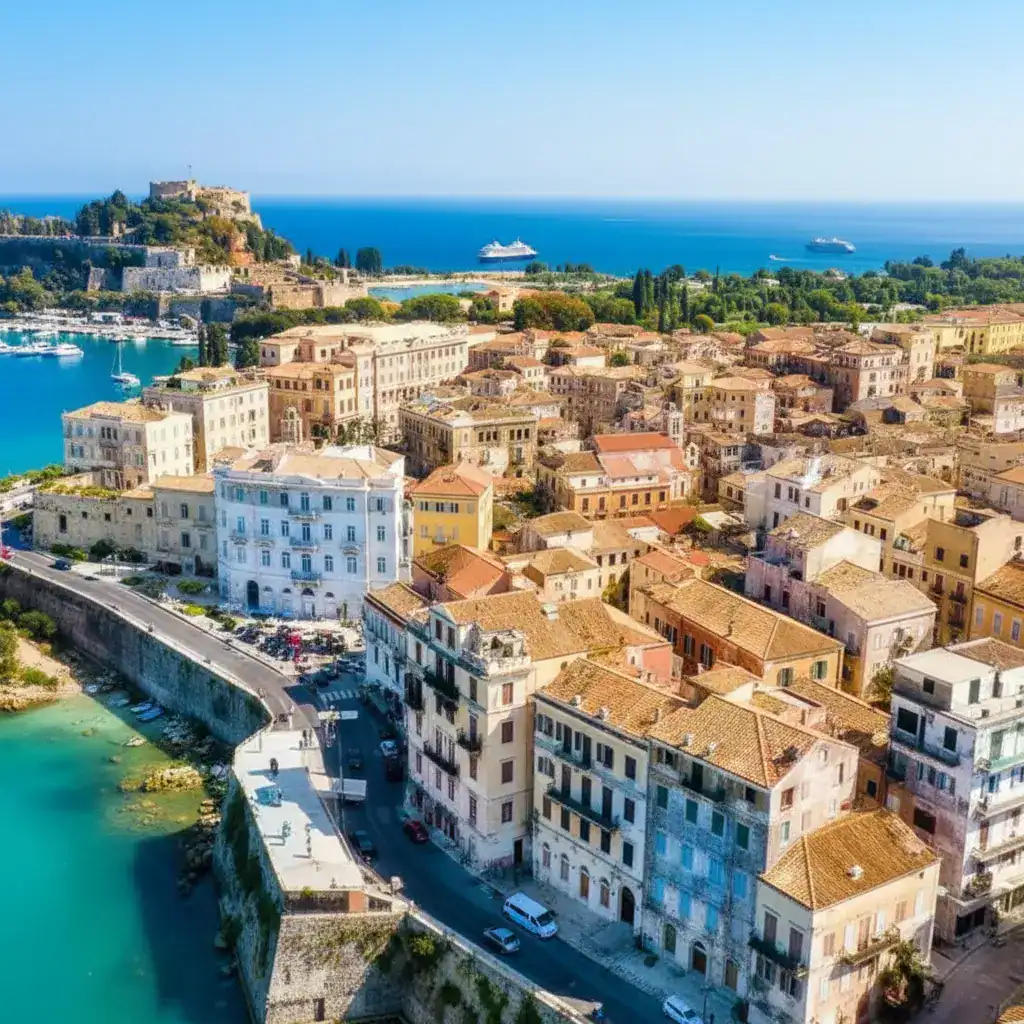
Corfu, a jewel of the Ionian Sea, finds itself at a critical juncture. While recent studies paint a glowing picture of its tourism sector, boasting near-universal visitor satisfaction and a substantial economic footprint, underlying issues threaten to derail its long-term sustainable growth. The island’s reliance on tourism, coupled with inadequate infrastructure and pronounced seasonality, presents a complex challenge that demands immediate and coordinated action from all stakeholders.
Corfu’s Tourism: A Dual Narrative of Success and Struggle
The Corfu Chamber of Commerce recently hosted a pivotal event titled “Tourism & Economy in Corfu: Data for a New Era of Development.” This gathering unveiled two comprehensive studies that meticulously detail both the visitor experience and the structure of the local economy. The findings, presented to a diverse audience of government officials, local authorities, and business leaders, offer a nuanced understanding of the island’s present and future economic landscape.
High Satisfaction, Hidden Flaws: The Visitor Experience
The “Visitor Satisfaction and Experience Improvement Survey,” conducted in collaboration with KPMG, revealed an impressive 94.8% satisfaction rate among tourists, with many expressing high or absolute contentment with their overall Corfu experience. Key strengths identified include the island’s natural beauty, its renowned hospitality, and its overall allure as an international destination. Furthermore, over 96% of visitors would recommend Corfu, and 97% of those satisfied with dining, shopping, and entertainment would enthusiastically endorse the island.
However, this rosy picture is not without its blemishes. The survey pinpointed several areas negatively impacting the visitor experience, most notably the quality of infrastructure, the management of increased tourist traffic, and the consistency of the overall tourist experience. A striking finding was that one in five visitors considered the island’s road network problematic. As Despina Papachrysanthou, Partner, Transformation & Operations at KPMG, and George Tzovlas, Senior Manager at KPMG, emphasized during their presentation, high satisfaction is not a given; it is the result of continuous effort and coordination. Even minor weaknesses can tarnish the destination’s overall image, necessitating a more holistic approach to visitor experience management.
A Billion-Euro Economic Nucleus: The Tourism Sector’s Dominance
The “Corfu Economic Map – Market Observatory,” developed in collaboration with INEMY of the Hellenic Confederation of Commerce and Entrepreneurship (ESEE), meticulously mapped the local economy’s structure, underscoring tourism’s role as the primary engine of growth. The core tourism sectors-accommodation, catering, travel agencies, and rental activities-collectively generate a turnover approaching 1 billion euros, accounting for a significant 36% of the island’s economic activity. The accommodation sector alone saw a substantial increase, reaching 614 million euros, while travel agencies experienced the highest percentage growth, exceeding 60% over the last three years.
Remarkably, trade also emerged as a vital sector, boasting over 2,900 active businesses and a cumulative turnover exceeding 1 billion euros by 2023. Valia Aranitou, Scientific Director of INEMY-ESEE and Professor at the Department of Sociology of EKPA, and Polyvios Moukoulis, Scientific Associate, INEMY-ESEE, highlighted that Corfu’s economy operates as an interdependent ecosystem, where key sectors are interconnected, creating multiplicative benefits. Nevertheless, the study unequivocally identified seasonality as one of the most critical structural characteristics of the local economy. The disproportionately high contribution of the third quarter to the annual turnover of many sectors starkly illustrates Corfu’s intense tourism dependence. The study also broadened the definition of a “tourism business” beyond hotels and restaurants, encompassing other sectors that exhibit seasonal turnover concentration or causal dependence on tourism demand.
The Road Ahead: Bridging the Gap Between Vision and Reality
The event also featured three thematic panels with representatives from the market, local government, and the state, which further illuminated the complex picture emerging from the data. Business sector representatives underscored the dynamism of the tourism ecosystem but also highlighted sustainability challenges related to increased costs and competition. They stressed the need for a stronger connection between tourism activities and the local market.
Local government officials, in turn, emphasized the strain that increasing visitor numbers place on inadequate infrastructure and daily life, advocating for more balanced development across the island’s different regions. Strategically, discussions focused on leveraging data to formulate policies that would bolster local entrepreneurship, improve infrastructure, and contribute to a more sustainable and resilient development model for Corfu and the Ionian Islands.
A consensus emerged among all participants: Corfu’s future must be built on a more balanced and sustainable development model that preserves the destination’s authenticity and genuinely enhances the well-being of the local community. The glaring lack of infrastructure, affecting both visitor experience and residents’ daily lives, was consistently highlighted as a critical issue. The need to further strengthen Corfu’s brand was also emphasized.
Particular attention was paid to the necessity of creating organized structures, such as a business park, coupled with boosting the manufacturing sector, which remains largely untapped. This would allow a greater share of the economic value to remain on the island.
Political Will and Collaborative Action: The Missing Pieces?
The event saw a strong presence from government representatives, national bodies, and local authorities. Minister of Tourism, Ms. Olga Kefalogianni, commended the Corfu Chamber of Commerce for its initiative, acknowledging Corfu’s significant contribution to Greek tourism. She affirmed the government’s commitment to supporting sustainable tourism development through major projects, including upgrades to tourist ports and essential infrastructure like water supply and road networks. “Corfu will, in a few years, be a place with a new development dynamic in both tourism and more broadly,” she stated, underscoring the crucial role of collaboration between government, local authorities, and the private sector.
Deputy Minister of Shipping and Island Policy, Mr. Stefanos Gikas, focused on developing maritime tourism and improving port infrastructure, advocating for alternative tourism forms and extending the tourist season. He reiterated that general infrastructure improvements are fundamental for sustainable and balanced tourism development.
Mr. Napoleon Maravegias, Secretary-General of Commerce, Ministry of Development, broadened the discussion, noting that the issues extend beyond Corfu to all islands. He stressed the need to diversify beyond tourism, particularly by strengthening the link between tourism and agricultural activity, and by promoting local products in hotels and restaurants to enhance gastronomic tourism.
Mr. Kostas Mouzakitis, President of the Corfu Chamber of Commerce, expressed satisfaction with the clear picture provided by the studies. “The challenge now is how this dynamic will be transformed into greater value for the island,” he stated, calling for a balance between private investments and public infrastructure, increased recycling of tourist spending within the local economy, and continuous quality upgrading of the tourist product.
The Unresolved Questions: Can Corfu Navigate the Future?
Despite the positive indicators, the path forward for Corfu is fraught with challenges. The island’s economic prosperity is inextricably linked to tourism, yet the very success of this sector is straining its foundational infrastructure. The discussions underscored a critical need for genuine coordination and cooperation among all stakeholders, along with targeted interventions to extend the tourist season and achieve more balanced and sustainable development.
Can Corfu truly evolve into a model of sustainable tourism, or will it succumb to the pressures of over-tourism and under-investment? The data suggests that while the will to improve exists, the execution requires a strategic shift from reactive problem-solving to proactive, long-term planning. The island’s authenticity, its natural beauty, and the well-being of its local community hang in the balance. The coming years will reveal whether Corfu can successfully leverage its strengths, address its weaknesses, and build a resilient future that benefits both its visitors and its residents.
Source: tornosnews