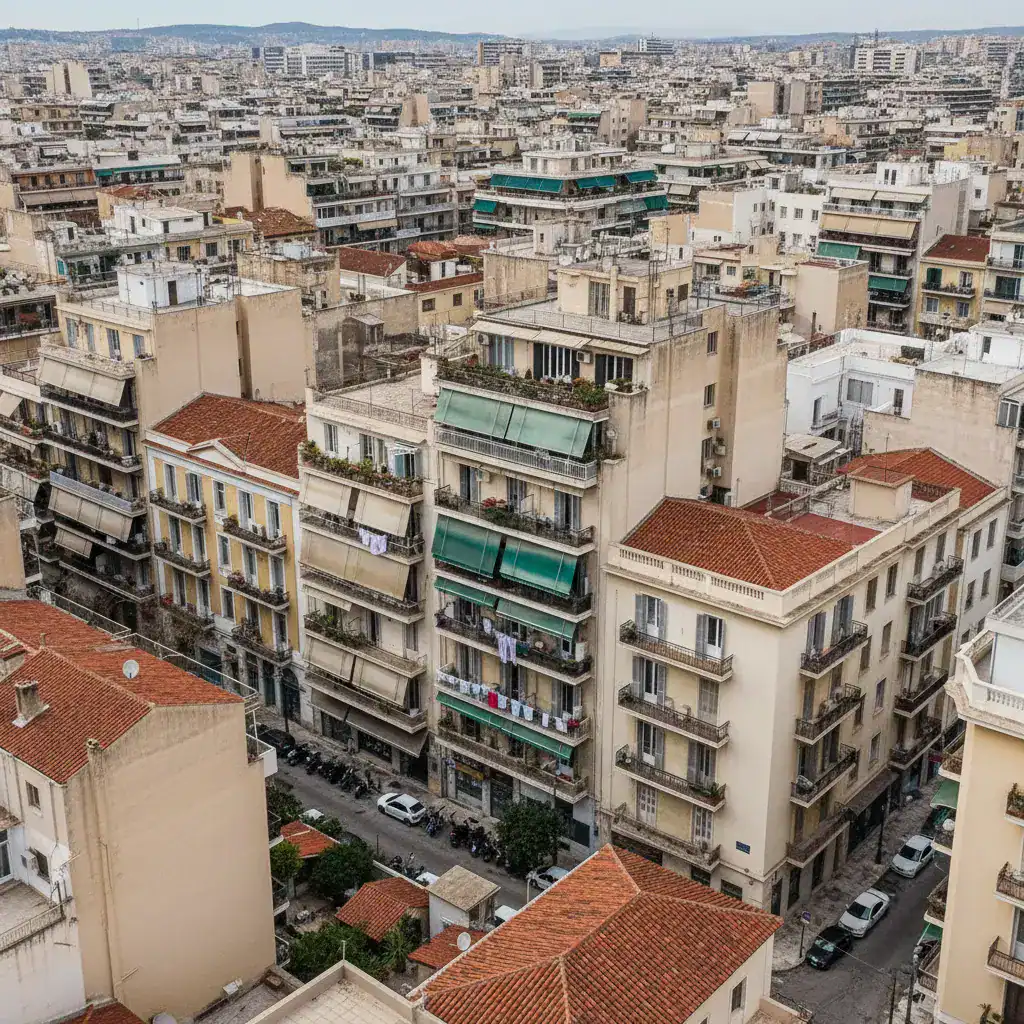
Athens Housing Market: Affordable Homes Drive New Price Increases
The Athens housing market is experiencing a rapid transformation, with buyers increasingly turning to more affordable options. This trend is leading to significant price increases across the market, even in areas previously considered ‘second-tier.’
The pressure on incomes, coupled with soaring prices for newly built properties, is pushing a growing number of buyers towards older apartments, lower energy-efficiency homes, or areas with a lower cost of living. This shift in demand is already evident in both property listings and data from real estate agencies.
Significant Price Increases in Previously Affordable Areas
Notably, the largest price increases are now being recorded in these very categories of properties. In some areas, the annual increase reaches up to 29%, confirming that interest is dynamically moving beyond traditionally expensive zones.
Drapetsona and Lykovrysi are characteristic examples, where asking prices have risen significantly, showing similarly high growth rates. Perama, the center of Athens, and Ano Patisia exhibit a similar picture, as these areas started from a lower price base and show greater potential for appreciation.
Widening Gap Between New and Older Properties
At the same time, the gap between newly built and older properties is widening. In areas like Chalandri, the average price for new apartments exceeds 4,500 euros per square meter, while in Marousi and Vrilissia, it is even higher. In the center of Athens, the few available new constructions reach or even exceed 5,800 euros per sq.m., and in expensive neighborhoods, prices can touch 7,700 euros.
Faced with these price levels, older homes are the only option for a large segment of interested buyers. In the southern suburbs, for example, the average price for new properties is above 5,100 euros per sq.m., while older properties are around 3,200 euros. A similar situation is observed in the northern suburbs, where the difference remains significant.
The largest disparity is found in the Municipality of Athens, where the average price for new properties reaches approximately 4,000 euros per square meter, compared to about 2,250 euros for older residences.
Limited Supply and Shifting Demand
The limited supply of new housing also plays a significant role in shaping the market. In the Municipality of Athens, new constructions account for a small percentage of available properties for sale, while in the rental market, the percentage is even lower. This limits options and increases competition, keeping prices at high levels.
In the eastern and western suburbs, the price difference is smaller but still noticeable. In the eastern suburbs, older properties are close to 2,000 euros per sq.m., while new ones exceed 3,100 euros. In the western suburbs, the situation is similar, with a clear superiority of prices for new properties.
A similar trend is observed in the areas around Piraeus, where newer properties average 3,700 euros per square meter, while older ones are around 2,300 euros.
The shift in demand is also reflected in online searches. The center of Athens remains at the top, but Piraeus has significantly climbed in the preferences of interested parties, while Peristeri now consistently appears in the top positions.
The list of most popular areas also includes Glyfada, Chalandri, Kifissia, Marousi, Palaio Faliro, Nea Smyrni, and Kallithea. A similar picture is seen in the rental market, where interest is spread across more areas.
Increased Intention to Buy Despite High Prices
Despite increased prices, the intention to buy a home shows strengthening. According to recent data, the percentage of those who plan to acquire a home is increasing, with an even greater rise among renters.
A crucial factor in this trend is the assessment that rents will continue to rise in the coming years. This prospect prompts many to consider buying as an alternative, despite the high prices.
The result is a market that is being reshaped: demand is shifting towards more affordable areas, but this very shift creates new pressures and leads to a new cycle of increases.
Source: https://www.newsbeast.gr/financial/arthro/12978103/akinita-i-strofi-sta-fthina-spitia-stin-athina-fernei-nees-afxiseis-timon-se-oli-tin-agora