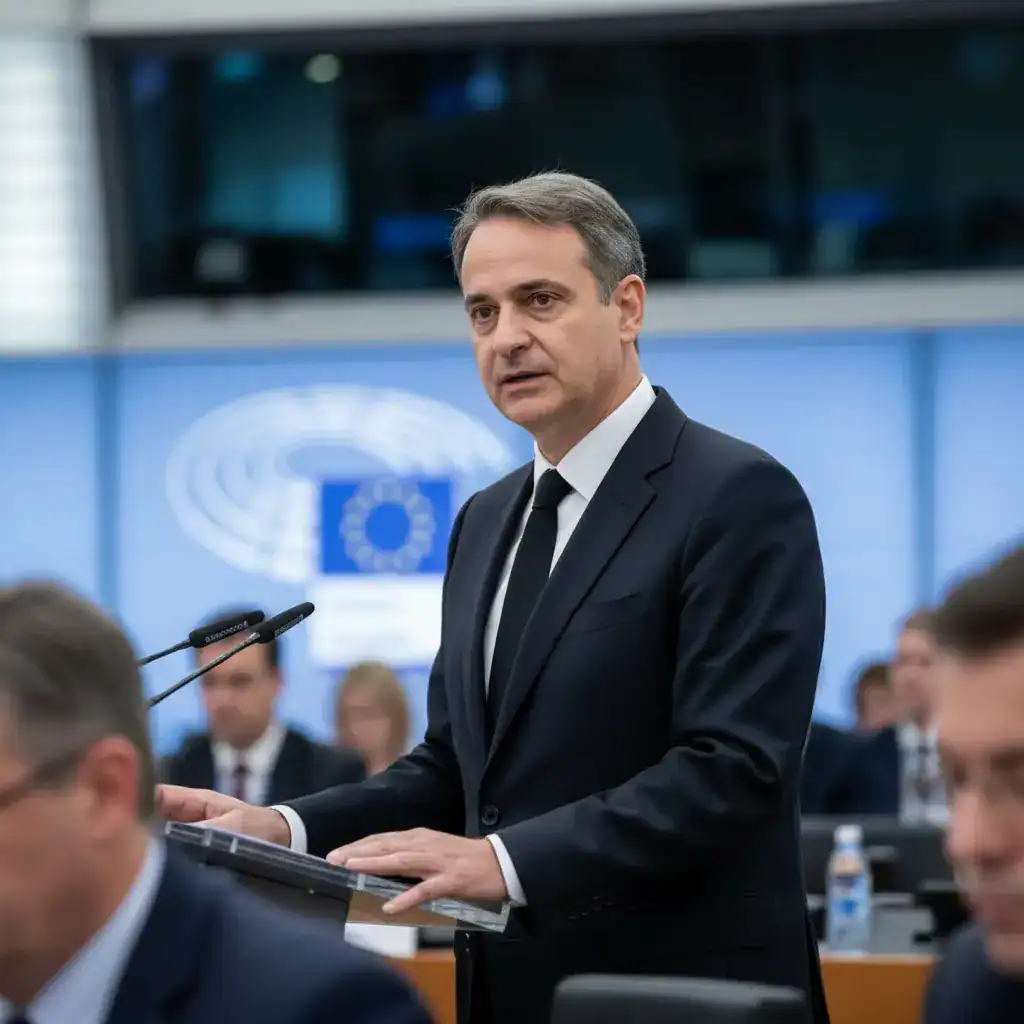
Athens, March 18 – Greek Prime Minister Kyriakos Mitsotakis has initiated a three-day marathon of high-level contacts in Brussels, aiming to accelerate European-level decisions to tackle the ongoing energy crisis. Athens is advocating for a comprehensive package of short-term and medium-term measures to be ready for activation, if necessary, to support consumers and businesses, particularly concerning energy prices.
Mitsotakis Emphasizes Proactive Approach to Energy Crisis
Government officials explain that, drawing from the experience of the recent energy crisis triggered by the Russian invasion of Ukraine, the current situation demands proactive preparation to avoid delays in activating any necessary support measures. Prime Minister Mitsotakis underscored this sentiment at the Bloomberg conference, stating, “We must be fast and efficient; we do not have the luxury of time if something goes wrong.” Information suggests he may also request fiscal relaxation.
Today, Mr. Mitsotakis will attend an event in Brussels marking 50 years since the founding of the EPP. On the sidelines of this event, he will engage in discussions with his counterparts in anticipation of tomorrow’s EU summit.
Greece’s Energy Strategy: A Blueprint for Resilience
At the “Greek Energy: The New Era” conference, the Prime Minister outlined the strategy that has transformed Greece into a net energy exporter and a provider of energy security for the broader southeastern European region. He highlighted the country’s energy mix, which aims to further bolster its resilience against external crises, and emphasized the need for a European protective shield for consumers against price increases stemming from the situation in the Strait of Hormuz.
As he explained, the EU must have an action plan ready with short-term and medium-term support measures, a point he will insist upon when addressing other EU leaders.
Government Confident in Energy Policies
The Greek government feels vindicated by the energy strategy it has pursued in recent years. This strategy includes a significant increase in installed renewable energy sources, the utilization of hydroelectric units, and the simultaneous development of the vertical natural gas corridor.
Specifically, through the vertical corridor, domestic needs are met as natural gas complements renewables in generating the minimum amount of electricity required by Greece. Energy is also channeled to many countries in the region, strengthening the strategic relationship with the USA, at a time when the EU has already decided to gradually cease natural gas imports from Russia.
Notably, in 2019, Greece imported approximately 6 billion cubic meters of natural gas, exclusively for domestic consumption. Last year, however, 17 billion cubic meters passed through Greece.
Investing in Domestic Hydrocarbon Exploration and Future Energy Sources
In parallel with these developments, Greece is investing in the exploration of its own offshore hydrocarbon deposits. The first exploratory drilling in the country in 40 years has been initiated in the Ionian Sea, with further explorations set to begin shortly south of Crete and the Peloponnese.
This multifaceted planning will also include discussions on the potential benefits of Greece utilizing nuclear energy in the future, particularly newer-generation small modular reactors. However, government officials noted that this latter issue is still under investigation.