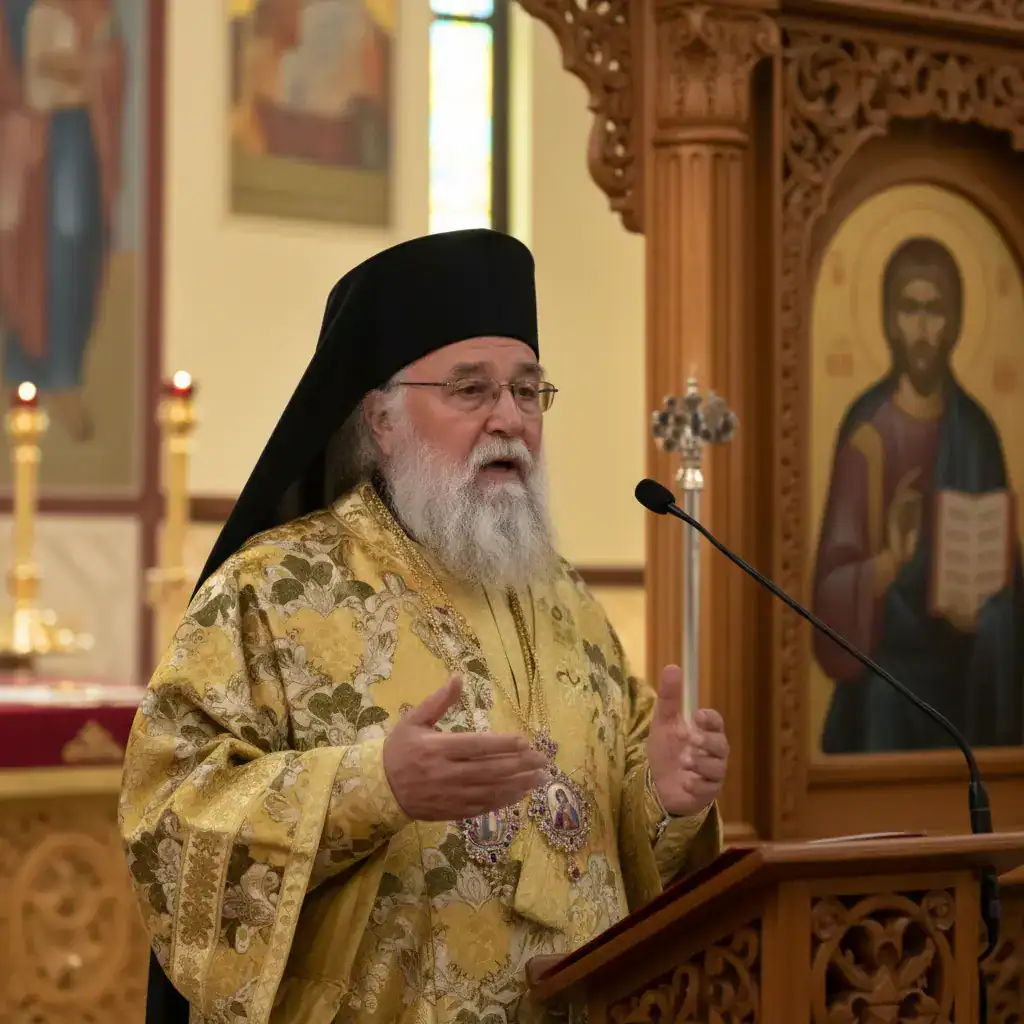
ATHENS, Greece – In a stark warning against the encroaching digital age, His Eminence Metropolitan Nektarios of Corfu, Paxoi, and Diapontian Islands, delivered a powerful sermon at the Metropolitan Cathedral of Athens on the Sunday of Orthodoxy, March 1, 2026. Addressing a distinguished congregation including His Beatitude Archbishop Ieronymos II of Athens and All Greece, the President of the Hellenic Republic, and the Minister of Education, Religious Affairs, and Sports, Metropolitan Nektarios articulated a profound concern for a future where ‘everything will be regulated by algorithms.’
The Enduring Relevance of Orthodoxy in a Shifting World
The Metropolitan’s address, delivered on a day commemorating the restoration of holy icons in 843 A.D., transcended historical reflection, serving as a poignant commentary on contemporary societal challenges. He drew parallels between the historical struggles against iconoclasm and modern threats to faith and human identity, emphasizing that the Sunday of Orthodoxy is not merely a remembrance of the past but a living confession of faith in Christ.
Metropolitan Nektarios began by quoting Saint Gregory Palamas, distinguishing between ‘believing in God’ and ‘believing God,’ asserting that true faith encompasses both correct understanding of God and unwavering trust in His promises. This distinction, he argued, is crucial in an era where spiritual truths are often diluted or distorted.
The Dangers of a ‘Post-Human’ World
The core of Metropolitan Nektarios’s message revolved around the perils posed by unchecked technological advancement and evolving anthropological models. He identified three key temptations facing humanity:
- The Temptation of Power and Self-Interest: He questioned the place of the vulnerable in a world where military, economic, and technological might dictate terms, leading to a reality of servitude and unfreedom.
- The Deification of the Human Image: The Metropolitan criticized the modern obsession with the physical body, detached from the immortal soul, leading to its commodification for pleasure, consumption, and display. He reminded the faithful that the body is a visible image of the Invisible God, meant for communion in truth and love.
- The Allure of Agendas and a Different Anthropological Model:
- The ‘Woke’ Movement: Metropolitan Nektarios expressed concern that the ‘woke’ movement, under the guise of addressing social inequalities, undermines the foundational values of Western civilization, replacing them with a ‘rights-based’ ideology that denies natural and moral truths. He stressed that Orthodox tradition, while not denying rights, seeks to transcend them through love and freedom in Christ.
- Technological Progress and Transhumanism: He warned against a ‘post-human’ world where artificial intelligence and algorithmic control could gradually mechanize humanity, stripping individuals of free thought and will in the name of convenience and efficiency.
- The Illusion of Internet Freedom: The Metropolitan cautioned against the deceptive nature of the internet, where an abundance of information often masks the truth and fosters a false sense of knowledge and freedom, leading to a rootless existence without a divine purpose.
Orthodoxy: A Bulwark Against Modern Challenges
Metropolitan Nektarios underscored the enduring bond between Orthodoxy and Hellenism, highlighting the Church’s historical role in preserving Greek language, culture, and values during times of subjugation. He emphasized that Orthodoxy offers a framework centered on humanity as the image of God, striving for freedom not only from external enemies but also from ego-centric self-sufficiency and hedonism.
He concluded by reiterating the Church’s sacred duty to proclaim Christ as the incarnate God, the Bread of Life, and the One who will raise and sanctify humanity. This message, he acknowledged, may not always be ‘pleasant,’ but it is rooted in the truth that sets humanity free. In an era of profound spiritual search, Orthodoxy remains a beacon, guiding individuals to resist the transient and embrace a life of love and truth that triumphs over death, not individually, but ecclesiocentrically.
“We believe in God and we believe God.” This, he declared, has been, is, and will be our unique identity.
Source: https://www.ekklisiaonline.gr/nea/kerkyras-odigoumaste-se-enan-kosmo-pou-ta-panta-tha-rythmizonte-apo-algorithmous/