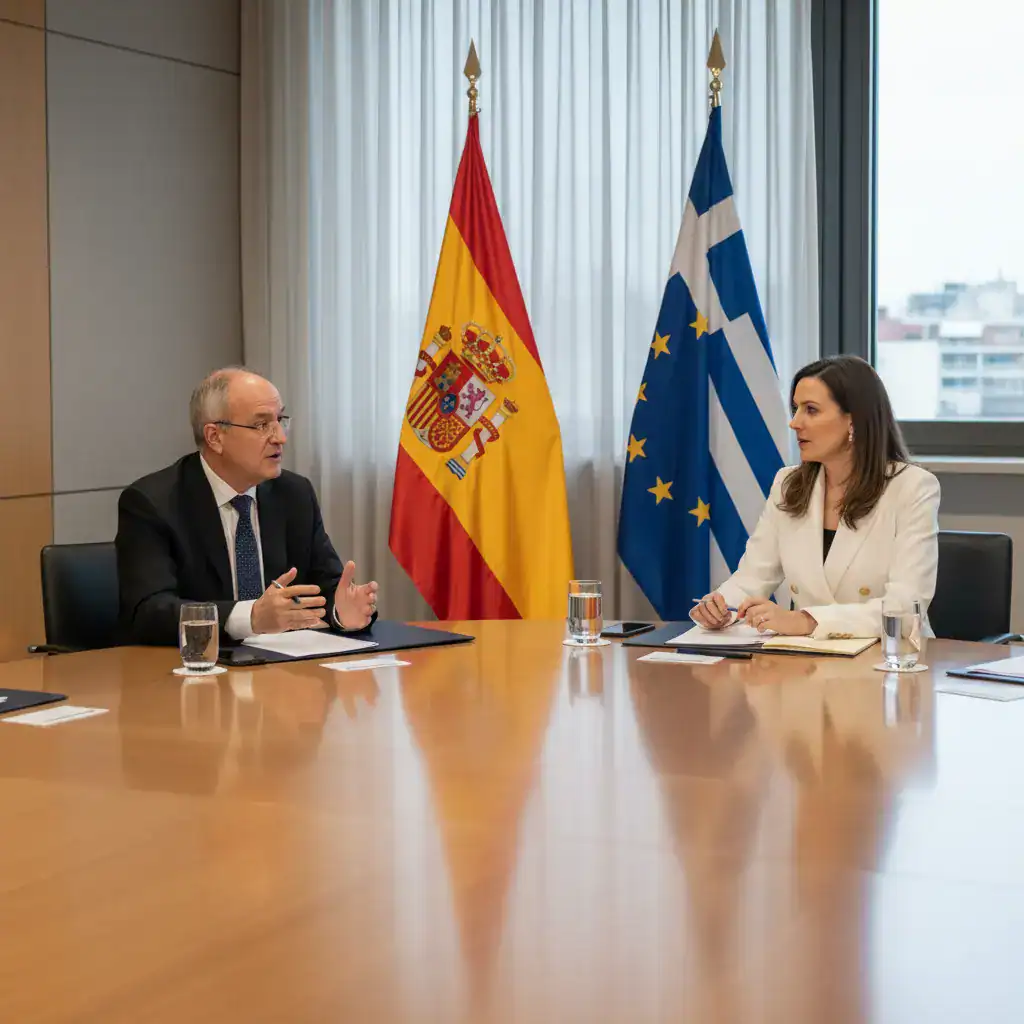
Athens, February 20 – Greece and Spain have moved to align their positions on critical aspects of the European Tourism Strategy, which is anticipated to be unveiled this spring. Discussions held in Madrid between Greece’s Tourism Minister, Olga Kefalogianni, and Spain’s Minister of Industry and Tourism, Jordi Hereu, centered on closer coordination in addressing shared challenges within the hospitality sector, alongside advancing its green and digital transition.
Key Areas of Bilateral Cooperation
The two nations emphasized several areas for joint efforts, aiming to strengthen the future of European tourism. These include:
- Elevating “Brand Europe”: Moving beyond the traditional “sun and sea” model to focus on authentic, high-quality, and sustainable experiences that provide tangible added value to local communities.
- Deepening Mediterranean Cooperation: Fostering stronger ties and collaborative initiatives within the Mediterranean region to enhance tourism offerings.
- Promoting Sustainable Tourism Development: Implementing practices and policies that ensure the long-term viability of tourism while minimizing environmental impact.
- Expanding Maritime Tourism: Exploring opportunities for growth and development in cruise, yachting, and other sea-based tourism activities.
- Exchanging Expertise on Digital Transformation: Sharing knowledge and best practices to accelerate the digitalization of the tourism ecosystem in both countries.
Ministers Kefalogianni and Hereu have agreed to sign a Memorandum of Cooperation in Tourism in 2026, a move designed to further solidify bilateral ties and facilitate the exchange of best practices between Greece and Spain.
Addressing Common Concerns: Short-Term Rentals and EU Funding
A significant point of discussion was the issue of short-term rentals. Both ministers underscored the urgent need for a coherent European regulatory framework to safeguard destination sustainability, protect the right to housing for local residents, and ensure transparency rules for international digital platforms operating in this sector. This reflects a growing concern across popular European destinations regarding the impact of short-term rental platforms on local communities and housing markets.
Furthermore, Greece and Spain reaffirmed their shared stance within European Union institutions, jointly advocating for increased funding to support the green transition and the modernization of tourism infrastructure across the continent. This united front aims to secure greater financial backing for initiatives that will help the tourism sector adapt to new environmental standards and embrace technological advancements.
Greece and Spain: Strategic Partners in Tourism
Minister Kefalogianni emphasized the strategic partnership between the two nations in the tourism sector. “In tourism, Greece and Spain are strategic partners,” she stated. “We share a common vision and are coordinating our actions for the future of the sector at national, European and international level.” This statement highlights the importance of this collaboration for shaping the future of tourism policy and development within the EU and beyond.
The alignment of Athens and Madrid on these critical issues comes at a time when the European tourism sector is navigating complex challenges, including the need for greater sustainability, digital innovation, and resilience in the face of global changes. The coordinated efforts of Greece and Spain, two prominent European tourist destinations, are expected to play a crucial role in influencing the direction and priorities of the forthcoming European Tourism Strategy.
This initiative also builds upon recent developments in the broader travel industry, such as Airbnb’s introduction of a ‘Book Now, Pay Later’ option to boost travel flexibility, signaling a wider trend towards more adaptable and accessible travel experiences. As Greece continues to attract a diverse range of tourists, including a notable rise in interest from Chinese and Indian markets, the focus on sustainable and high-quality tourism experiences becomes even more pertinent.
The outcomes of these discussions are poised to have a significant impact on the future landscape of European tourism, promoting a more unified and forward-thinking approach to its development and regulation.