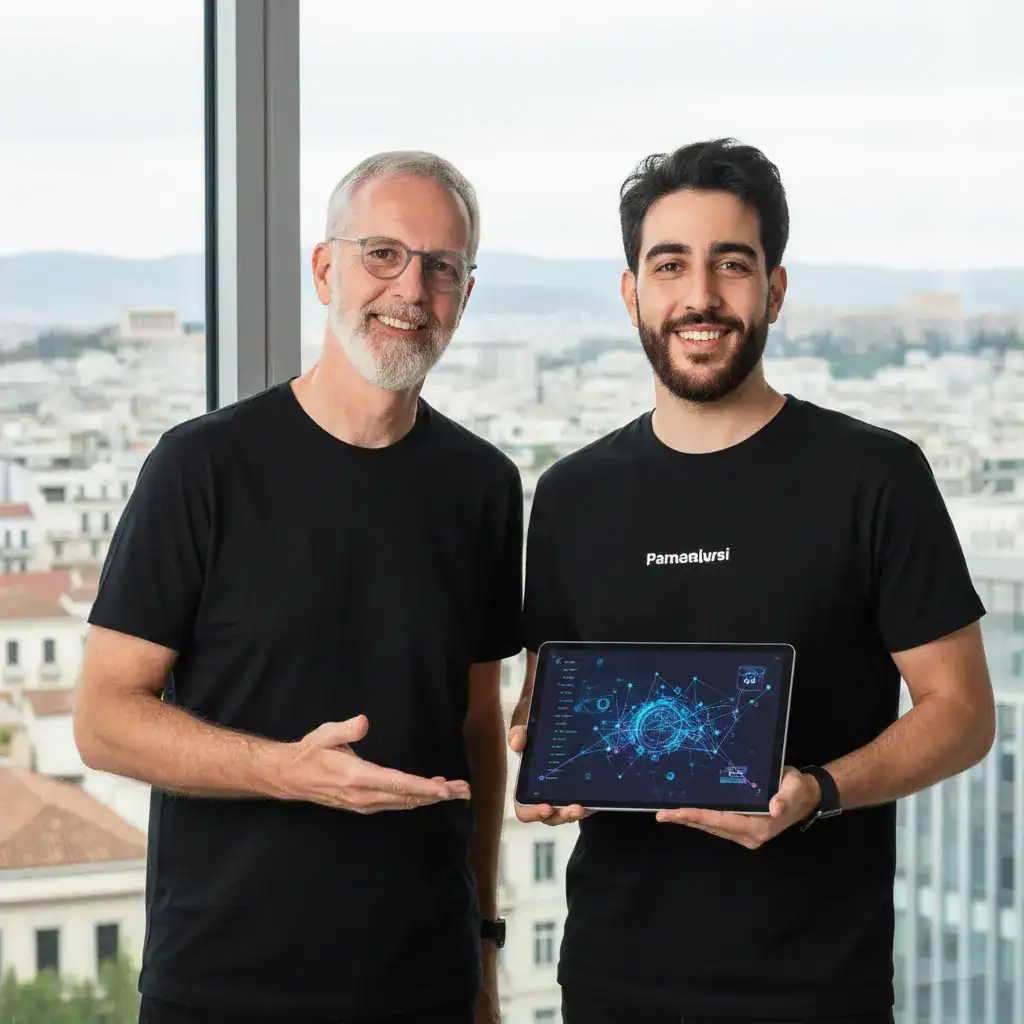
In the bustling heart of Athens, a new era is dawning, spearheaded by two unlikely yet perfectly aligned forces: Lars Rasmussen, the visionary co-founder of Google Maps, and Lefteris Katsiadakis, the dynamic young CEO behind Panathēnea, an ambitious startup festival. Together, they are meticulously crafting a narrative that positions Athens not just as a historical marvel, but as a burgeoning epicenter for innovation, where founders, investors, artists, and operators converge to elevate collective excellence.
Panathēnea: A Reimagined Ancient Festival for the Future
Inspired by the ancient Greek ethos of competition as a catalyst for human progress, Panathēnea is more than just a tech conference; it’s a grand experiment in fostering a holistic ecosystem where technology and art intertwine. “We wanted to build a big tech event,” Rasmussen explains, recalling the ancient Panathēnea, sister festival to the Olympics, held every four years. “Everyone would go to Olympia every four years for sports. Every other four years, people from across the Greek world would come to Athens for a 12-day festival organized mostly around competition whose purpose was discovering the next big thing to advance human excellence.”
This year’s Panathēnea promises an unparalleled density of global capital and operational expertise, with an impressive lineup of investors and founders from powerhouses like Index Ventures, Sequoia, Atomico, NVIDIA, OpenAI, and unicorn companies such as Deel, Fuse Energy, and Runway. “This is the first time we’re bringing this density of global capital and operators to Athens at once,” states Katsiadakis, emphasizing the festival’s fully European focus.
Bridging the Divide: Tech, Arts, and Culture
What truly sets Panathēnea apart is its radical inclusivity, daring to bridge the often-strained relationship between technology and the arts. While last year’s event was purely a tech conference, attracting over 3,000 attendees from 44 countries, this year introduces a separate arts component. “As AI advances at a breathtaking pace, it touches other industries, and one of our sub-missions is to bring tech and the arts closer together,” Rasmussen reveals. This bold move aims to create a constructive forum for debating critical questions, such as the impact of AI on employment and the role of culture in steering human development towards a beneficial future.
The festival’s non-profit structure, run entirely by students with the guidance of 50 unpaid volunteer mentors, mirrors the successful Slush model. This approach allows Panathēnea to prioritize impact over profit, fostering entrepreneurship without the pressure of stakeholder returns. “It doesn’t make the job harder; it just makes it more meaningful,” Katsiadakis asserts, highlighting their commitment to investing in the next generation and creating a movement within the ecosystem.
Athens: A Long-Term Investment in Innovation
Rasmussen’s journey to becoming a fervent advocate for the Greek ecosystem is a testament to Athens’s burgeoning potential. After scaling businesses in the US during the dot-com boom, he and his wife considered moving to Greece during the 2012 financial crisis. While the mood then was gloomy, with high unemployment and economic struggles, their return during the pandemic revealed a dramatically transformed landscape.
“We discovered hundreds of startups, many VCs, and real momentum. It’s one of the youngest ecosystems in Europe – and arguably one of the fastest-growing,” Rasmussen recounts. This vibrant transformation convinced him that Athens was not just an interesting place to live, but a place worth committing to long-term, echoing the success of Slush in Helsinki by creating a similar methodology for Greece.
Cultivating a “Can-Do” Mentality
A key contribution Rasmussen hopes to bring to the Greek ecosystem is the “intense can-do attitude and optimism” often associated with American entrepreneurship. He draws parallels to the early days of Google Maps in Sydney, where the notion of building a world-changing startup from Australia was met with skepticism. Today, that question is no longer asked, as the ecosystem has matured. “In Europe we don’t always grow up with that same confidence,” he notes, emphasizing the importance of fostering a mindset where ambitious goals are seen as normal.
Katsiadakis observes a generational shift, with young founders in Greece increasingly thinking pan-European and global. “The goal is no longer to build something just for Greece, but something European or global,” he explains, pointing to initiatives like EU-INC as reflections of this evolving mentality.
As Panathēnea prepares for its upcoming edition, both Rasmussen and Katsiadakis express immense excitement. Beyond the impressive lineup of successful founders and investors, they anticipate engaging discussions with “big thinkers who shape conversations about the future,” and of course, the party that brings everyone together. Panathēnea is not just an event; it’s an experience that unfolds across the city, deeply rooted in ancient traditions yet vibrantly shaped by a young, forward-thinking team, ready to bridge perspectives and expose ambitious minds to new ideas.
Source: https://therecursive.com/google-maps-co-founder-lars-rasmussen-and-lefteris-katsiadakis-are-turning-athens-into-a-startup-magnet/