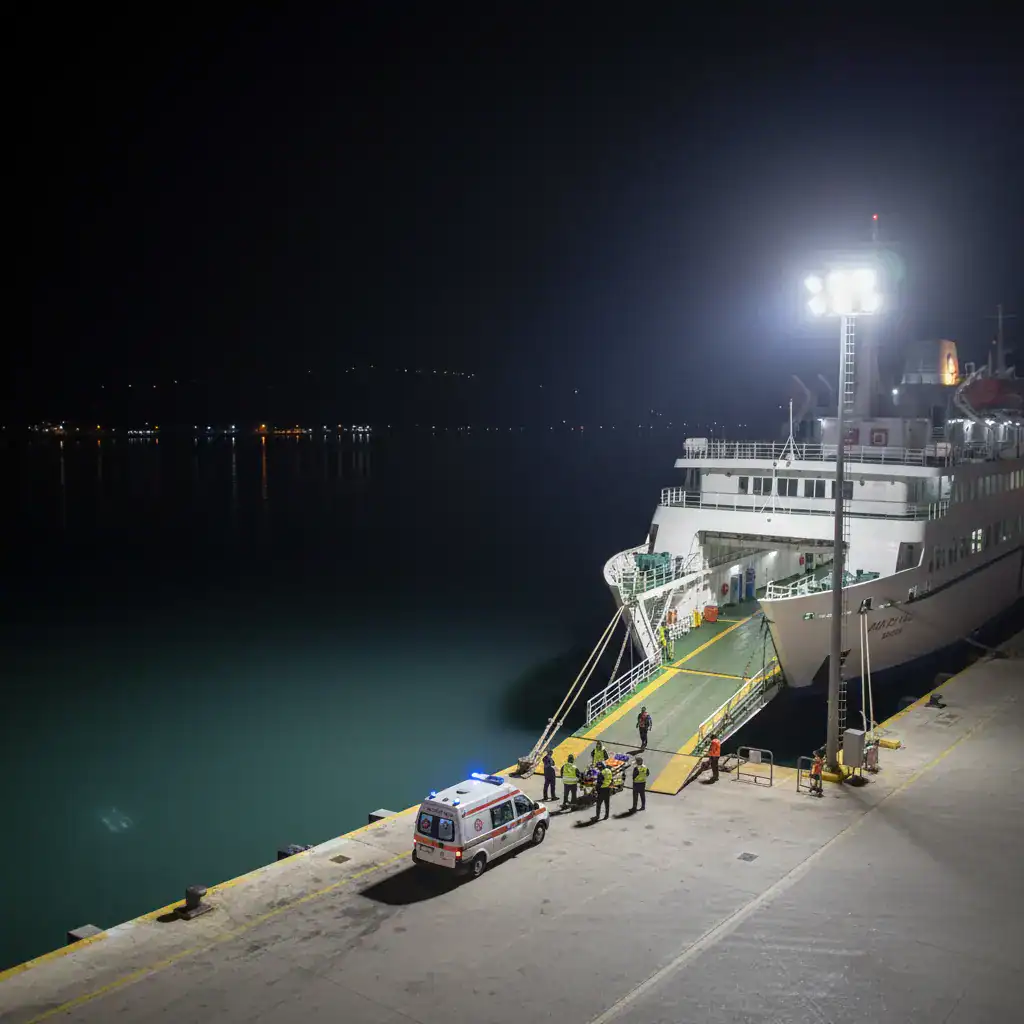
Emergency Transfer: 25-year-old Woman from Corfu to Igoumenitsa
Corfu, February 17 – A 25-year-old woman in urgent need of hospital treatment was safely transferred from Corfu to Igoumenitsa yesterday, February 16, 2026. The operation was carried out by a patrol boat of the Hellenic Coast Guard, under the direct coordination of its Operations Center, ensuring prompt medical attention for the young patient.
The emergency transfer highlights the critical role played by the Hellenic Coast Guard in providing essential services, particularly in island regions where access to specialized medical facilities may require inter-island transportation. The efficiency of the operation ensured that the 25-year-old received the necessary care without delay.
Details of the Transfer Operation
The transfer commenced from the port of Corfu, with the Hellenic Coast Guard patrol boat navigating to the port of Igoumenitsa on the mainland. This route is a common procedure for patients from Corfu who require medical services not readily available on the island, or for those needing specialized care in larger mainland hospitals.
While specific details regarding the woman’s condition were not disclosed due to patient privacy, the emphasis on “immediate hospital care” underscores the severity of the situation and the necessity of the rapid response. The Hellenic Coast Guard’s swift action was crucial in this medical emergency.
Hellenic Coast Guard’s Role in Medical Emergencies
The Hellenic Coast Guard frequently undertakes such humanitarian missions, serving as a vital link for residents of the Greek islands in accessing healthcare. Their capabilities include not only search and rescue operations but also the emergency transport of patients, often under challenging weather conditions.
This incident is part of a broader pattern of vital services provided by the Coast Guard, ensuring the well-being and safety of citizens across the Greek maritime territory. Such operations underscore the importance of well-equipped and responsive maritime forces in supporting public health infrastructure, especially in geographically dispersed regions like the Ionian Islands.
Broader Context: Weather and Infrastructure Challenges in Corfu
This medical transfer occurred amidst a period of significant weather challenges for Corfu. Recent reports from February 16, 2026, indicated that Corfu was on “red alert” due to gale-force winds, with recommendations issued to citizens. Additionally, the road from Benitses to Gastouri was reported to be cut in two, and Faliraki described as a “bombed landscape,” suggesting widespread impact from adverse weather conditions.
These infrastructure and weather-related issues can complicate emergency services, making the successful and timely transfer of the 25-year-old woman even more commendable. The coordinated effort between medical needs and maritime transport is essential in maintaining public safety and health in such environments.
The Decentralized Administration of Peloponnese, Western Greece, and the Ionian, through the signing of contracts, is contributing to addressing drought and water scarcity phenomena in Corfu, Lefkada, and other Ionian islands. This broader effort to improve regional infrastructure and services indirectly supports emergency response capabilities by enhancing overall regional resilience.
Furthermore, the Ionian Islands Region is representing Greek tourism at this year’s International Tourism Exhibition in Milan (BIT), indicating ongoing efforts to promote and develop the region, which includes improving various public services and infrastructure.
This incident serves as a reminder of the continuous efforts required to maintain and improve emergency response systems, particularly in regions with unique geographical and environmental characteristics.