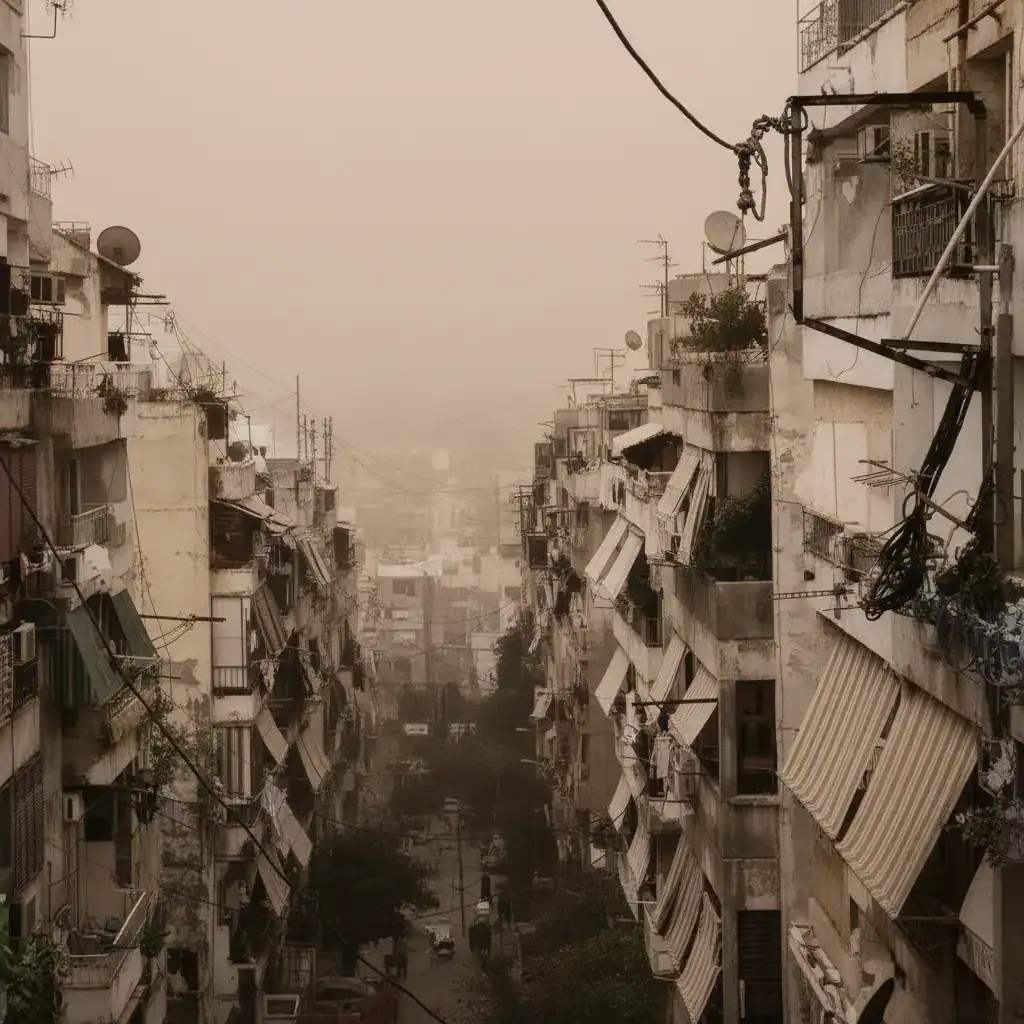
Athens and a large part of Greece have been enveloped in an ‘orange’ cloud as a wave of Saharan dust peaks, creating an eerie landscape across the Attica basin. The phenomenon, originating from the Sahara Desert, has covered the city’s iconic landmarks with a thick layer of haze, impacting visibility and air quality.
Saharan Dust Transforms Athenian Landscape
The Greek capital, Athens, has been experiencing an intense Saharan dust storm, turning the sky a dramatic orange hue and significantly reducing visibility. This extraordinary weather event, which began in the Sahara Desert, has blanketed the city’s famous landmarks, including the Acropolis, in a thick, dusty haze. The phenomenon has led to a surreal and otherworldly atmosphere, prompting widespread attention and concern among residents and authorities.
Impact on Air Quality and Visibility
According to the National Observatory of Athens, concentrations of airborne particulate matter are expected to remain high until the early morning hours of tomorrow. A shift in winds to westerly is anticipated to gradually clear the atmosphere, bringing relief from the current conditions. The elevated levels of dust have raised concerns about air quality, with residents advised to take precautions, especially those with respiratory issues.
Photographs circulating widely depict the dramatic alteration of the Attic landscape, showcasing Athens as it is rarely seen: shrouded in the fine sand particles that have traveled thousands of kilometers from the Sahara to cover daily life.
The Journey of Saharan Dust
Saharan dust storms are not uncommon in Greece, particularly during certain times of the year. However, the intensity and widespread nature of this particular event have been notable. These storms occur when strong winds over the Sahara Desert lift vast quantities of sand and dust into the atmosphere. These particles can then be transported over long distances by atmospheric currents, affecting air quality and weather patterns in regions far from their origin, including Southern Europe.
Health and Environmental Considerations
While often visually striking, Saharan dust can pose health risks. The fine particulate matter can penetrate deep into the lungs, exacerbating respiratory conditions such as asthma and bronchitis. Authorities typically issue health advisories during such events, recommending that vulnerable populations stay indoors and limit strenuous outdoor activities. Environmentally, the dust can also affect ecosystems, altering soil composition and impacting plant life.
Anticipated Relief and Future Outlook
The National Observatory of Athens’ forecast for a change in wind direction offers a hopeful outlook for the coming hours. As westerly winds begin to dominate, they are expected to gradually disperse the dust, allowing for a return to clearer skies and improved air quality. Until then, Athens remains under its orange shroud, a vivid reminder of the interconnectedness of global weather systems and the far-reaching impact of natural phenomena.
This event underscores the importance of monitoring atmospheric conditions and providing timely information to the public, allowing residents to take necessary precautions and adapt to such environmental changes.
Source: https://www.ertnews.gr/roi-idiseon/i-athina-sto-portokali-fotografies-pou-pnigoun-tin-anasa-apo-tin-epelasi-tis-afrikanikis-skonis/