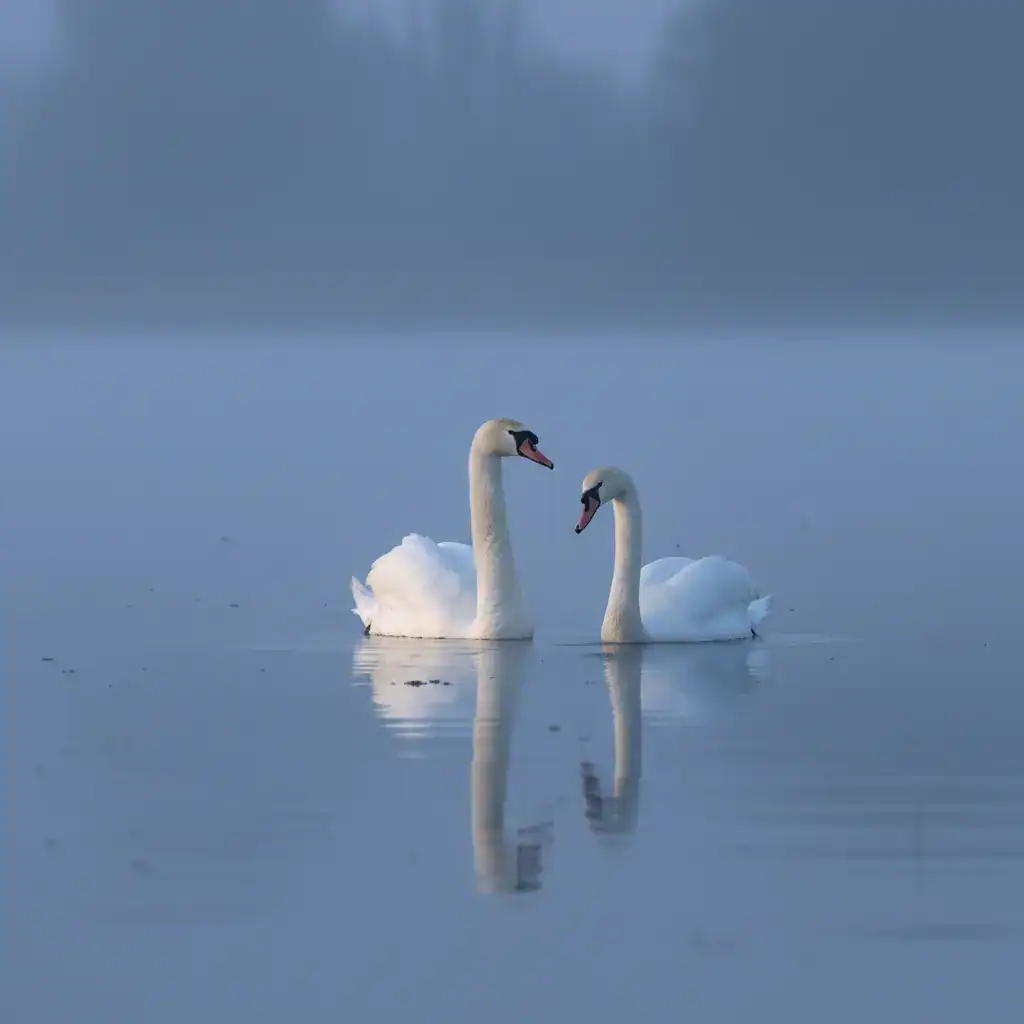
Athens, December 15 – Dozens of migratory swans from northern Europe have begun their annual migration to Kerkini Lake in northern Greece, where they will spend the winter months. These majestic birds will reside at the lake, located approximately 50 kilometers (31 miles) from the city of Serres, for a period of six months.
Kerkini Lake: A Vital Wetland Ecosystem
Kerkini Lake, an artificial reservoir in Central Macedonia, Greece, was originally created in 1932 and redeveloped in 1980 from an extensive marshland. It has since evolved into one of Greece’s most important birdwatching destinations, strategically positioned along the migratory flyway for birds traveling to the Aegean Sea, the Balkan region, the Black Sea, and the Hungarian steppes.
According to Theodoros Naziridis, general coordinator of the management body of the National Park of Kerkini, three distinct species of swans are making the lake their winter home:
- Tundra swans: Their population in Greece has seen a significant increase in recent years.
- Whooper swans: A smaller group, with approximately five individuals identified.
- Mute swans: Comprising seven or eight individuals.
“These are small populations, and we recognize the birds as they have rings or collars with information on their trip to Kerkini Lake,” Naziridis told the Athens-Macedonia News Agency.
A Haven for Birdwatchers and Rare Species
Kerkini Lake is a renowned location for birdwatchers and photographers due to its rich biodiversity. Beyond the swans, visitors can observe a wide array of species, including greater flamingos, Dalmatian pelicans, cormorants, pygmy cormorants, and cranes.
A notable discovery this year was the increased presence of dwarf geese, one of Europe’s most endangered species. The wetland hosted 143 dwarf geese, marking the highest number of sightings for this species in a single area in Europe in recent years, as reported by Naziridis.
Furthermore, at least 120 cranes were observed feeding in the Kerkini wetlands. The lake also hosts thousands of ducks, ranging from common species to rarer red-crested pochards, smews, mergansers, and white-headed ducks. Numerous waders and various birds of prey, such as the impressive white-tailed eagles, eastern imperial eagles, greater spotted eagles, northern goshawks, sparrow hawks, and merlins, can also be spotted.
The lake is home to 227 species of birds, particularly non-migratory ones, with 76 listed in the National Red Catalogue. At least 31 of these species are protected under the EEC’s Directive concerning wildlife.
Diverse Ecosystem Beyond Birds
The area surrounding Kerkini Lake also boasts an exceptional presence of a buffalo herd. The diverse ecosystem supports at least ten amphibian species (including frogs, salamanders, and newts), five snail species, and nineteen reptile species (lizards, snakes, and turtles). A great variety of insects also play a crucial role in the food chain, contributing significantly to the lake’s biological resources.
Kerkini Lake continues to be a vital natural habitat, attracting both wildlife and nature enthusiasts, and underscoring its importance in the broader European ecosystem.