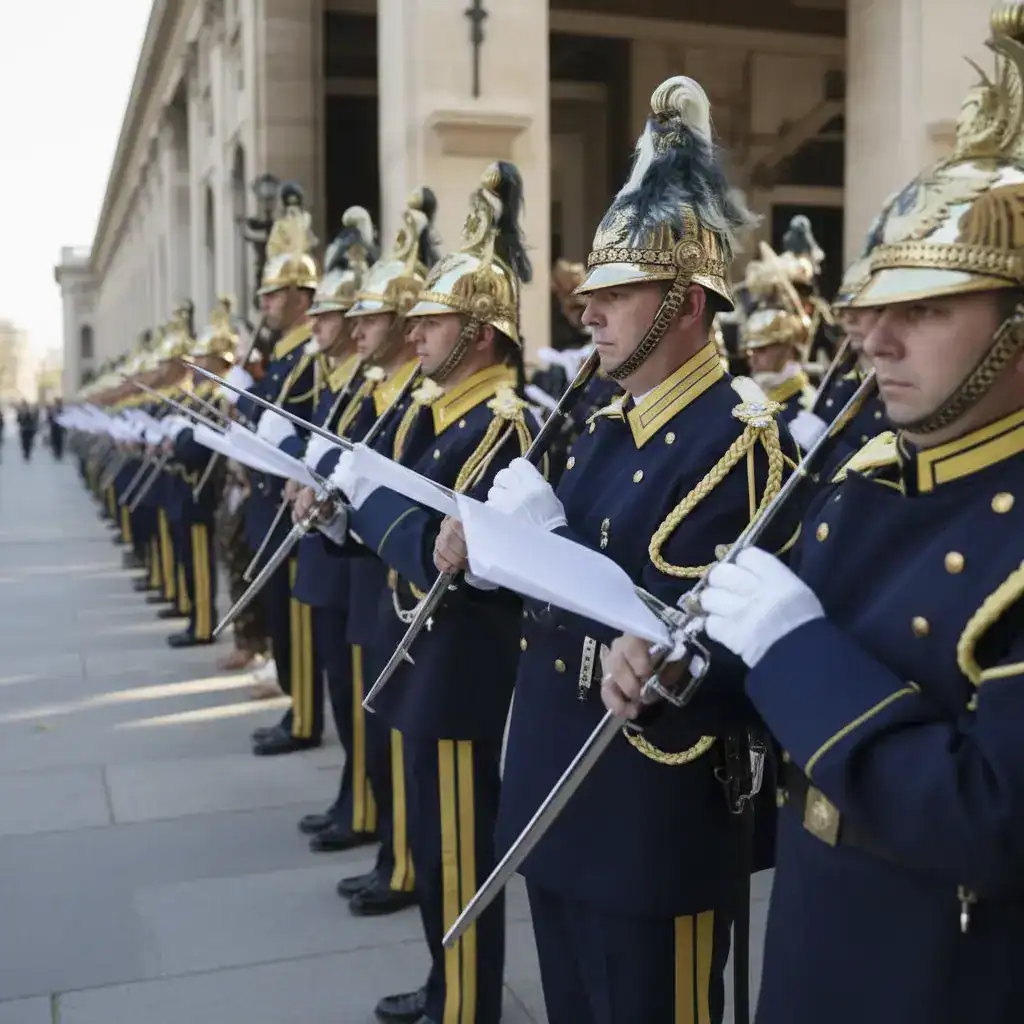
Corfu, an island renowned for its rich musical tradition and vibrant philharmonic bands, is currently grappling with a stark reality: its esteemed musical institutions are teetering on the brink of collapse due to chronic underfunding and governmental neglect. A recent, extensive tour by a Communist Party of Greece (KKE) delegation, led by conductor Christos Kolovos and regional councilor Alexandra Balou, has not only highlighted the resilience of these organizations but also unequivocally exposed the systemic failures that threaten their very existence.
The Unsung Heroes: Corfu’s Philharmonic Bands
The KKE delegation’s visits to all 17 philharmonic bands across the island, including the iconic Old, Mantzaros, and Kapodistrias bands in Corfu Town, revealed a consistent narrative: these bands, integral to the island’s identity and offering free music education to thousands of children, operate solely through the self-sacrifice and unwavering dedication of their members. This spirit of volunteerism, however, cannot mask the immense financial hurdles they face. From the prohibitive costs of purchasing and maintaining instruments and uniforms to the lack of adequate facilities and mounting utility bills, the bands are caught in a relentless struggle for survival.
Dr. Eleni Papadopoulou, a cultural policy expert from the University of Athens, comments, ‘The situation in Corfu is a microcosm of a broader issue in Greece. We celebrate our cultural heritage, but we fail to provide the fundamental support needed to sustain it. These philharmonic bands are not just musical ensembles; they are community hubs, educational institutions, and vital links to our past. Their survival should be a national priority, not a matter of individual heroism.’
A Systemic Failure: Beyond Ceremonial Gestures
The KKE’s initiative was not merely a ceremonial tour but a deliberate effort to expose what the government, the Ministry of Culture, the Ministry of Education, the Regional Authority, and the Municipalities choose to conceal. Beneath the veneer of cultural festivals and ‘tourism routes’ lies a profound absence of a coherent cultural policy, chronic underfunding, and the abandonment of a living testament to popular creativity. For the KKE, culture is not a commodity to be exploited for profit but a social mission dedicated to nurturing the human spirit, enabling individuals to understand and transform their reality in line with contemporary needs.
The Plight of Music Education: From University to School
The delegation’s investigation extended beyond the philharmonic bands, revealing equally distressing conditions at the Ionian University’s Music Department and the Corfu Music School. The Music Department continues to operate from unsuitable premises in the Fortress, a problem that has persisted since its establishment. The library, a crucial resource, is staffed by a single, non-permanent employee, and there are severe shortages of both administrative and teaching staff across all specialties. This glaring indifference from the state towards higher music education is a damning indictment of its priorities.
At the Corfu Music School, the discussions with educators and a tour of the facilities painted a grim picture: damp buildings, instruments exposed to damage, insufficient rehearsal spaces, cramped classrooms, and evidence of rodent infestation. School committees, armed with minimal resources, are left to battle for basic operational needs, including exorbitant electricity and water bills. The lack of specialized teachers for each instrument, with some instructors covering two or three, further compromises the quality of education.
Professor Nikos Georgiou, a musicologist at the Aristotle University of Thessaloniki, states, ‘It’s a tragedy that a region with such a profound musical legacy cannot adequately support its educational institutions. The state’s failure to invest in music education is not just an economic oversight; it’s a cultural crime that will have long-lasting consequences for future generations.’
The ‘Tourism Product’ Versus Public Culture
Alexandra Balou emphasized that while governments and local authorities frequently extol Corfu’s ‘unique musical tradition,’ their actions contradict their words. Behind the grand rhetoric, there is no strategic planning, no funding, and no basic provision for addressing structural problems or supporting schools and philharmonic bands. The tradition is treated as a ‘tourism product,’ while in essence, the philharmonic bands are schools, public cultural institutions, and a social service that the state is obligated to genuinely support.
Conductor Christos Kolovos pledged that the KKE would intensify its efforts to highlight these issues at regional, municipal, and parliamentary levels. He asserted that culture cannot survive on ‘volunteerism’ and ‘goodwill’ alone, nor can it operate under market logic. It demands stable state funding, infrastructure, personnel, and political will that recognizes culture as a right of the people, not a cost.
A Call to Action: The Future of Corfu’s Music
Both Kolovos and Balou vowed that their campaign in Corfu would not end here. They committed to continuing their advocacy, alongside the members of the philharmonic bands, schools, and music education sector, to address specific problems and fight for a culture that relies not solely on the heroism of its creators but on the stable, substantive, and public support it rightfully deserves. The KKE will continue to champion art and culture that empowers individuals to define their lives, understand the world, and, most importantly, find a path to change it, freeing it once and for all from the barbarity of poverty, exploitation, unemployment, and wars.
The current state of Corfu’s musical institutions is a stark reminder that cultural heritage, no matter how rich, cannot thrive without sustained investment and a genuine commitment from the state. The future of Corfu’s unique musical tradition now hinges on whether these calls for action will finally translate into concrete policy changes and adequate financial support.
Source: https://corfutvnews.gr/kerkyra-oi-filarmonikes-mas-einai-ki-aftes-scholeia/