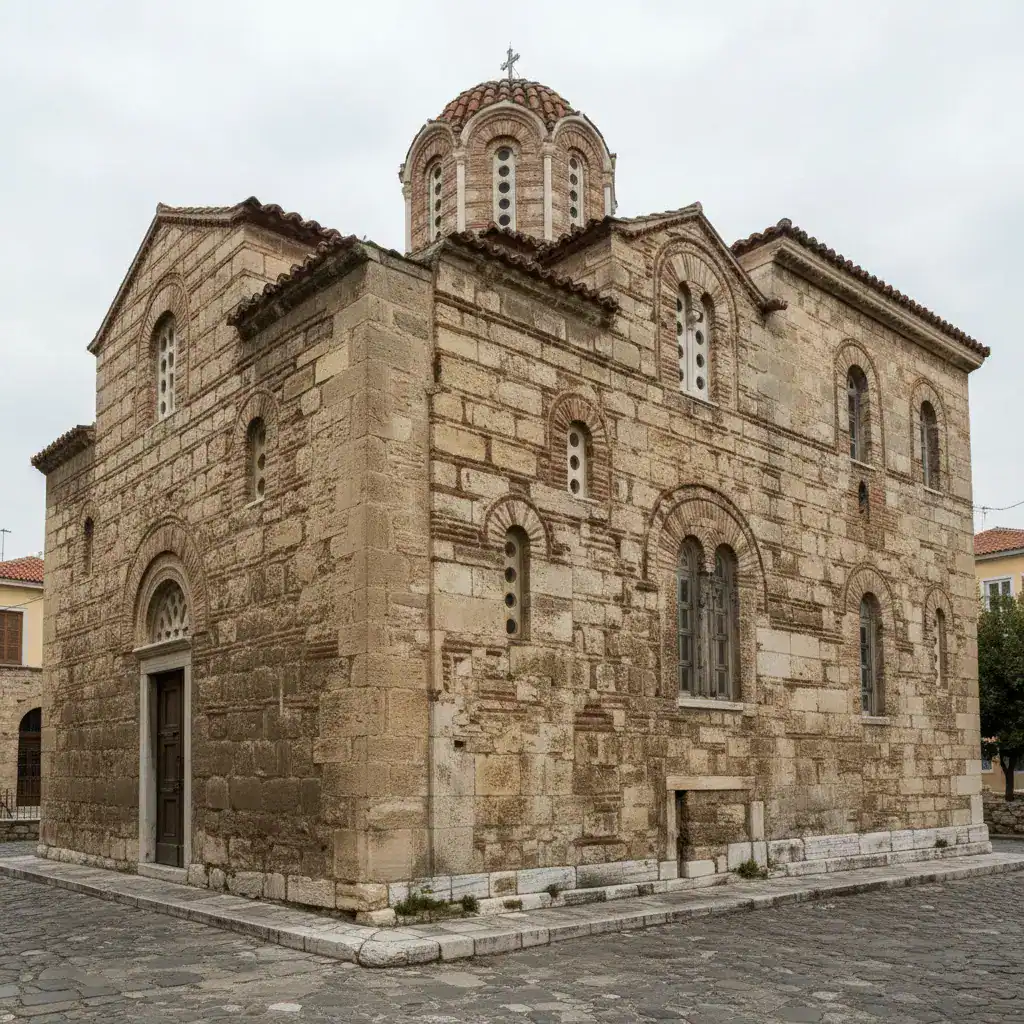
Athens, December 9, 2025 – The Greek Ministry of Culture has commenced a comprehensive project aimed at the stabilization, conservation, restoration, and enhancement of the historic Byzantine Church of Agios Nikolaos Ragavas in Plaka, Athens. This initiative targets one of the most significant surviving Byzantine monuments in the capital, underscoring its historical continuity.
Comprehensive Restoration for a Landmark of Athens
The project encompasses several critical areas, including the structural restoration and aesthetic enhancement of the church. Furthermore, it involves the meticulous conservation of its interior décor and the modernization of its electromechanical installations. This multi-faceted approach seeks to preserve the monument’s integrity while ensuring its long-term viability and accessibility.
Minister of Culture Lina Mendoni highlighted the profound historical value of the church and its integral role in the narrative of the capital. “The Church of Agios Nikolaos Ragavas is a preeminent Byzantine monument in Athens, testifying to the city’s uninterrupted historical continuity,” Mendoni stated. She further emphasized that given the church’s location within the protection zone of the Acropolis archaeological site, its enhancement will complement the cultural itinerary that showcases the capital’s rich historical layers. The Minister stressed that this emblematic example of Middle Byzantine architecture helps integrate significant Christian monuments into the visitor experience, often overshadowed by the dominant Ancient ruins.
Historical Context and Architectural Evolution
Situated at the intersection of Prytaneiou and Epicharmou streets, the Church of Agios Nikolaos Ragavas was founded around the mid-11th century. Tradition links the church to the noble Byzantine family of the Ragavas, which notably included Emperor Michael I Ragabe (reigned 811-813 AD). This connection is further supported by an engraved inscription discovered on a column capital within the dome during the 1979-1980 restorations, which mentions the name Leo Ragkavas and dates to after the mid-11th century.
The monument’s architectural history is characterized by four primary construction phases:
- Original Church (11th Century): A cross-in-square structure featuring an Athenian-type dome.
- Eastern Reconstruction (Late 17th Century): Significant rebuilding of the eastern façade.
- 19th Century Expansion: Additions including the Chapel of Agia Paraskevi and the western hall.
- Post-1917 Addition: The construction of the bell tower.
Addressing Urgent Needs and Previous Interventions
The church has undergone several interventions throughout its history, including a partial restoration of its Byzantine elements and dome in 1979-1980, followed by landscaping of the surrounding area in 1999-2000. However, recent challenges, such as lightning damage to the dome in 2016 (repaired in 2019) and persistent rainwater ingress problems, have underscored the urgent necessity for comprehensive structural and conservation work. The church’s interior boasts painted decoration applied in various later phases, including several Western-style figurative and decorative elements, all of which will now be meticulously conserved as part of this extensive project.
Source: greekreporter.com