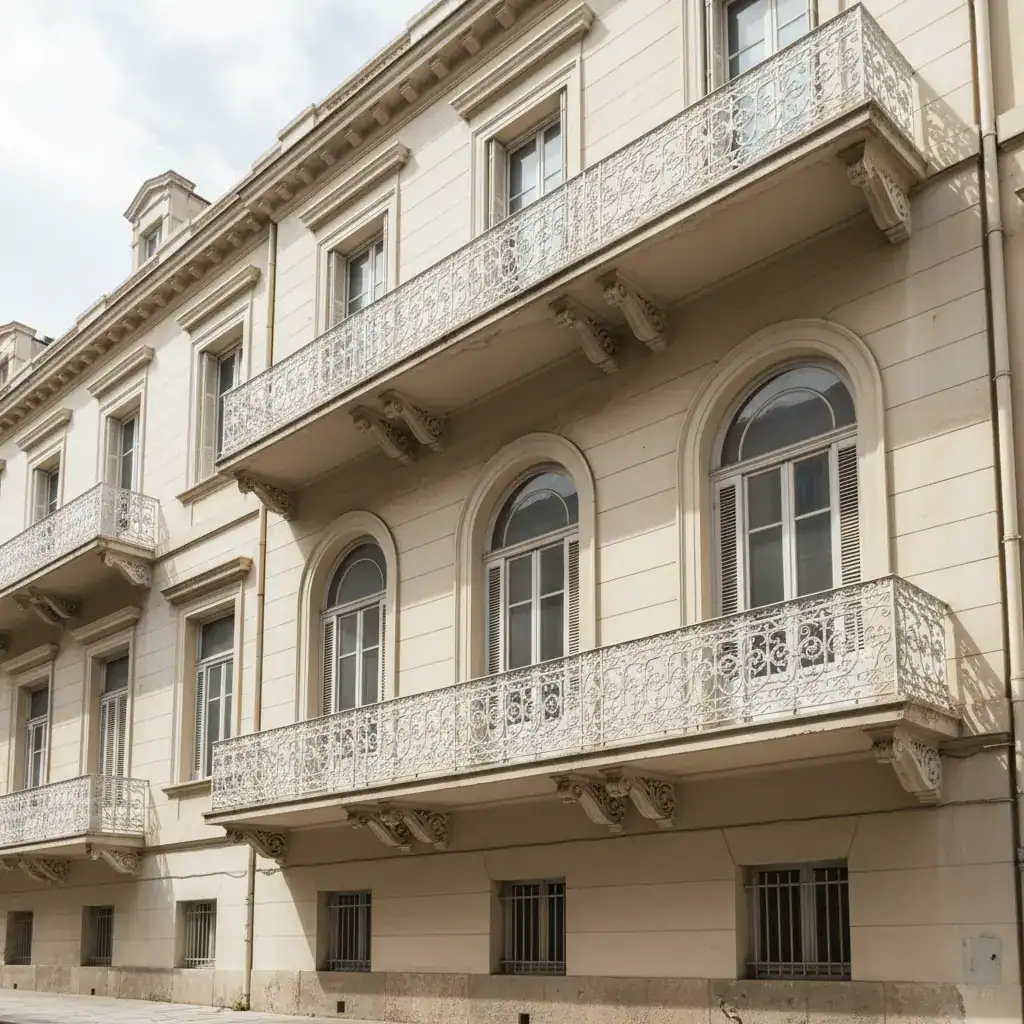
The establishment of clear rules for activities within Corfu Town’s public spaces is a prerequisite for ensuring their public function and equitable access for all, residents and visitors alike. The Technical Chamber of Corfu (TEE Corfu) asserts that these regulations should be a common right, not an individual privilege, to foster a collective stewardship of Corfu as a living monument of global cultural heritage. Such an approach, they argue, is essential for preserving the city’s values and elements that contribute to the collective improvement of residents’ quality of life.
The Draft Regulation: A Revised Attempt at Urban Order
The current draft of the Urban Operating Regulations for Corfu Town is a revision of a previous text that, despite being a Ministerial Decision, never fully materialized as a regulatory provision due to its non-adoption by the Municipal Council of Central Corfu. TEE Corfu emphasizes that any such regulation must aim to protect the architectural heritage, safeguard cultural value, and secure the living conditions of its residents. These three conditions are deemed essential for preserving the city’s monumental character and embedding the freedom of citizen participation in social and urban transformation into daily life.
The Chamber warns against regulations that might undermine these prerequisites, especially in an era where the ‘right to the city’ is a politically pertinent concept. Economic, cultural, social, and political activities in public spaces should be conducted in a manner that economic pursuits do not burden cultural and social assets but rather contribute to their development, making the city ‘attractive’ in contemporary terms. Crucially, these measures require systematic and methodical monitoring to allow for periodic review, modification, or alteration as deemed necessary.
Tailored Approaches for a Diverse Urban Fabric
A key recommendation from TEE Corfu is the need for the regulation to be more specialized, adapting its provisions to the specific areas of the city where activities are described. The Chamber stresses that the urban space should not be treated as a uniform field. Specialized measures are imperative to standardize interventions differently in the Old Town, the buffer zone, and the wider urban area. The immediate implementation of these regulations is highlighted as an urgent necessity and a top priority for all involved stakeholders. Years of delaying the adoption of an institutional framework for human activity in public spaces, and the avoidance of implementing measures, contribute to the degradation of the monument and, by extension, the quality of life.
Specific Observations and Recommendations from TEE Corfu:
- Outdoor Seating for Businesses: The placement of tables and chairs in squares, pedestrian streets, and sidewalks should be proportionate to the internal capacity of the establishment. It should not create a sense of private space. The issue of seating in arcades needs case-by-case consideration, acknowledging their role in pedestrian movement and weather protection. The requirement for a mechanical engineer’s certification for awning stability is considered an erroneous provision.
- Social and Political Activities: Social and political activities in public spaces should be governed by the same rules as cultural events. Requiring lengthy advance notice and municipal council approval for events by citizen associations or political bodies essentially attempts to prohibit political gatherings in the Old Town’s public spaces, leading to its desocialization and transformation into a purely commercial zone. A committee, representing all social and political views, should be established to provide opinions on these matters. Alternatively, designated outdoor areas within the city should be identified for social and political events, with clear specifications and guarantees.
- Street Art and Performers: Corfu should embrace its role as a natural host for art. Street musicians, painters, and other artists are a European cultural practice dating back to the Middle Ages. No provisions should transform street art into a mere profession or the artist into a small-time entrepreneur. The proposed text’s 80dB noise limit should be reduced to 50dB. A platform for artists to declare their location and time of performance should be considered to manage city capacity and performance duration. Differentiating between student artists and others does not facilitate the dissemination of art.
- Aesthetic Standards and Building Facades: High aesthetics should be promoted as a value that enhances quality of life. Special attention must be given to improving building facades by restricting or prohibiting the display of merchandise outside shops and on facades. The adoption of display cases 40cm wide and 1.8m high is recommended for shops with only one opening.
- Building Interventions and Renovations: The regulation must acknowledge that Corfu’s urban fabric is a result of centuries of applied architecture, both official and unofficial. Therefore, the architectural ensemble includes numerous modern or newer buildings that cannot be treated identically to traditional or Venetian-era structures. The use of iron frames, common in many professional buildings since their construction, should not be universally replaced by wooden frames.
- Facilitating Accessibility: The installation of elevators in buildings should be facilitated.
- Streamlining Facade Repairs: Procedures for local facade repairs (painting, plastering, etc.) should be simplified and standardized. Pre-agreed and standardized methods (e.g., color palette, materials, window frames) with the Ministry of Culture and categorization by area (Old Town, Buffer Zone, New Town) are crucial. Each intervention should consider the building’s nature (monument vs. newer construction) and its location. The approval process should be swift, requiring minimal documentation (e.g., technical report, photos) and overseen by officials from the Old Town Office. The paragraph requiring a full architectural study for interventions should be removed to simplify procedures.
- Categorizing Buildings for Renovation: Buildings should be categorized by construction period or character. For monument buildings (pre-1830 or later monuments designated by the Ministry of Culture), interventions should be supervised by Ministry of Culture architects in collaboration with the Old Town Office. For other buildings, more flexible and modern morphological rules should apply, allowing for aluminum or plastic windows of specified colors, Hellenic-Roman tiles, and external thermal insulation. These rules should vary by area, be standardized and clear, proposed by the Old Town Office, approved by the Architectural Council, and ultimately endorsed by the Ministry of Culture, with implementation overseen by the Old Town Office.
- Scaffolding Regulations: The requirement for scaffolding only on mezzanines is deemed excessive. Scaffolding types should be considered on a case-by-case basis, with traditional scaffolding preferred as a more economical solution if it does not impede pedestrian traffic or create safety issues. Technical specifications and safety plans must always be adhered to.
- Canopies and Shop Equipment: Metal canopies at shop and residence entrances should be permitted. A special typology for shop equipment (chairs, etc.) should be included in the regulation.
- Public Space Awareness: The regulation should institutionalize measures and obligations that make public space known to all.
- Pilot Programs and Incentives: Pilot implementation of measures for a few years, with incentives for businesses or citizens who adapt immediately (even before regulatory institutionalization), should be encouraged.
- Dedicated Service for Oversight: A dedicated service should be established to standardize rules, record the effectiveness of measures, and enforce them (e.g., an Old Town Office).
- Open Consultation and Review: The regulation should provide for an open consultation process and periodic review of measures and provisions, allowing for their re-evaluation and revision as needed.
Ultimately, TEE Corfu’s detailed critique underscores a fundamental tension: the need for enforceable rules to manage a historic city’s public spaces versus the imperative to ensure these rules are fair, nuanced, and do not stifle the very life they seek to regulate. The challenge lies in crafting a framework that protects Corfu’s unique heritage while fostering a vibrant, accessible, and equitable urban environment for all.
Source: https://www.kerkyrasimera.gr/to-tee-kerkyras-epi-toy-kanonismoy-astikis-leitoyrgias-tis-polis/