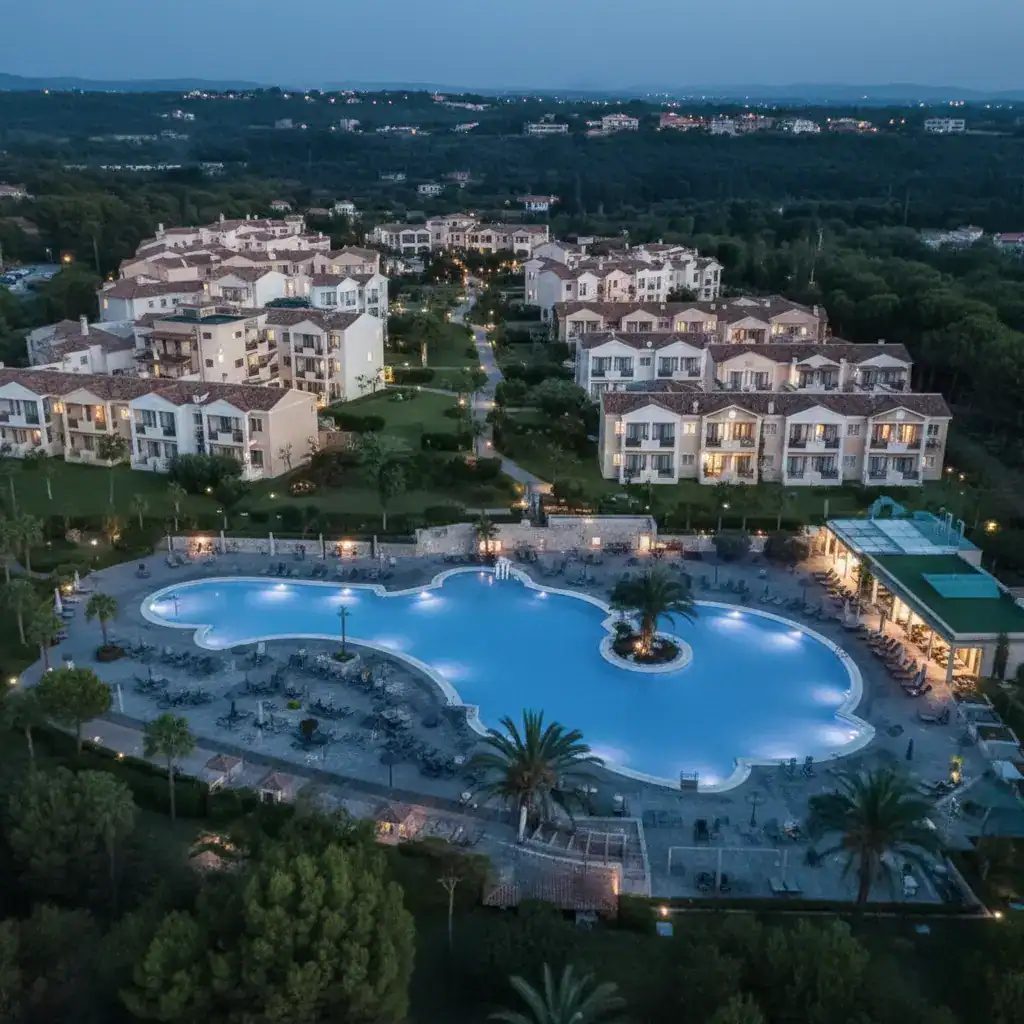
A major development for the tourism sector in North Corfu is underway following the Ministry of Culture’s decision to approve the construction of a new 5-star hotel complex in the area of “Agios Spyridonas” Perithia, within the Municipal Unit of Thinalia, North Corfu. The project is being spearheaded by P & S Commercial Tourist Industrial S.A., a company controlled by the Roka family, which already boasts a significant hotel presence on the island.
Roka Group’s Extensive Investment Program
The Roka group, which entered the tourism industry through its founder, the late Thomas Roka, is implementing a substantial investment program totaling 70 million euros. This includes the comprehensive renovation of the Mareblue Beach Resort, a 4-star plus family resort located in the northeast of the island. Additionally, the group acquired and entirely renovated a hotel unit in the Gouvia area of Corfu, now operating as the 5-star Cook’s Club Corfu. A 600-person capacity hall was also renovated, creating a modern and technologically advanced multi-purpose venue capable of hosting events ranging from conferences to various other functions. The Rox Events Hall at Cook’s Club Corfu opened its doors in September 2023.
Furthermore, the group is currently expanding the Mareblue Beach Resort with new suites, an amphitheater, new à la carte restaurants, and generally new facilities. They are also moving forward with the investment in a 5-star, adults-only hotel, which Panos and Spyros Rokas believe will become a landmark for the island of Corfu. Finally, they are constructing an 80-room staff hotel to meet the accommodation needs of their personnel.
Details of the New Investment
The decision was issued by the Directorate of Byzantine & Post-Byzantine Antiquities of the Ministry of Culture, following a multi-year application process, consultations, and opinions from the relevant Monument Councils. The approval comes with binding conditions that dictate both the architectural character of the complex and its environmental management.
The Ministry approves the construction but imposes specific prerequisites aimed at harmonizing the complex with the natural and traditional landscape of the area:
Mandatory Architectural Specifications
- All buildings must feature pitched wooden roofs, covered exclusively with yellow Byzantine-style tiles. Roman or modern tiles are prohibited.
- Doors and windows must adhere to strict proportions (1:2 and 1:50 respectively).
- All frames, shutters, and doors must be traditional wooden, with no use of aluminum.
- Color schemes must be exclusively earthy tones to ensure the complex visually integrates into the landscape.
Prohibition of Visible Mechanical Installations
The placement of external air conditioning units, antenna systems, or other electrical/mechanical equipment protruding from facades or roofs is not permitted. Any necessary installations must be integrated into non-visible locations.
Significant Restriction on Pools – 50% Reduction in Area
One of the strictest conditions concerns the water surfaces of the complex. The Ministry mandates:
- A 50% reduction in the total dimensions of swimming pools.
- Pools must be filled exclusively with seawater, and only after obtaining relevant approval from the competent authorities.
This condition is linked to the preservation of the region’s water resources, the reduction of the environmental footprint, and the protection of the local ecosystem.
Mandatory Submission of an Environmental Impact Study (EIS)
Although the Ministry of Culture grants approval based on archaeological legislation, it explicitly states that work cannot commence until a comprehensive Environmental Impact Study (EIS) is submitted and approved. Concurrently, a modified architectural study, adapted to the strict conditions of the decision, must be submitted.
The EIS will examine issues such as impacts on the landscape and environment, water management, accessibility, and compatibility with the broader development plan of the Municipality.
Renovation of the Old Olive Mill – The Reuse of a Monumental Shell
Special mention is made of the historic building of the old olive mill on the northwest side of the plot, which will be converted into a restaurant. The Ministry imposes detailed conditions:
- Preservation of all traditional architectural elements (stone frames, arches, etc.).
- Reconstruction of the roof exactly in its original form.
- Absolute prohibition of visible electrical/mechanical installations.
- Maintenance and preservation in situ of all equipment from the old olive mill.
- No additional work without new permission.
The protection of the building aims to preserve the cultural identity of Perithia within the new tourist environment.
Source: https://money-tourism.gr/apokleistiko-nea-ependysi-se-xenodocheio-5-asteron-stin-kerkyra-tin-oikogeneia-roka/