Athens, November 28 – The Greek Waste, Energy and Water Regulatory Authority has officially recommended that the region of Attica, home to nearly half of Greece’s population, including its capital Athens, be placed under a state of emergency. This urgent call comes in response to an increasingly severe water shortage threatening the metropolitan area and follows similar declarations for the islands of Leros, Patmos, and Meganisi, all facing critical water supply issues.
Dramatic Decline in Reservoir Levels Prompts Urgent Warning
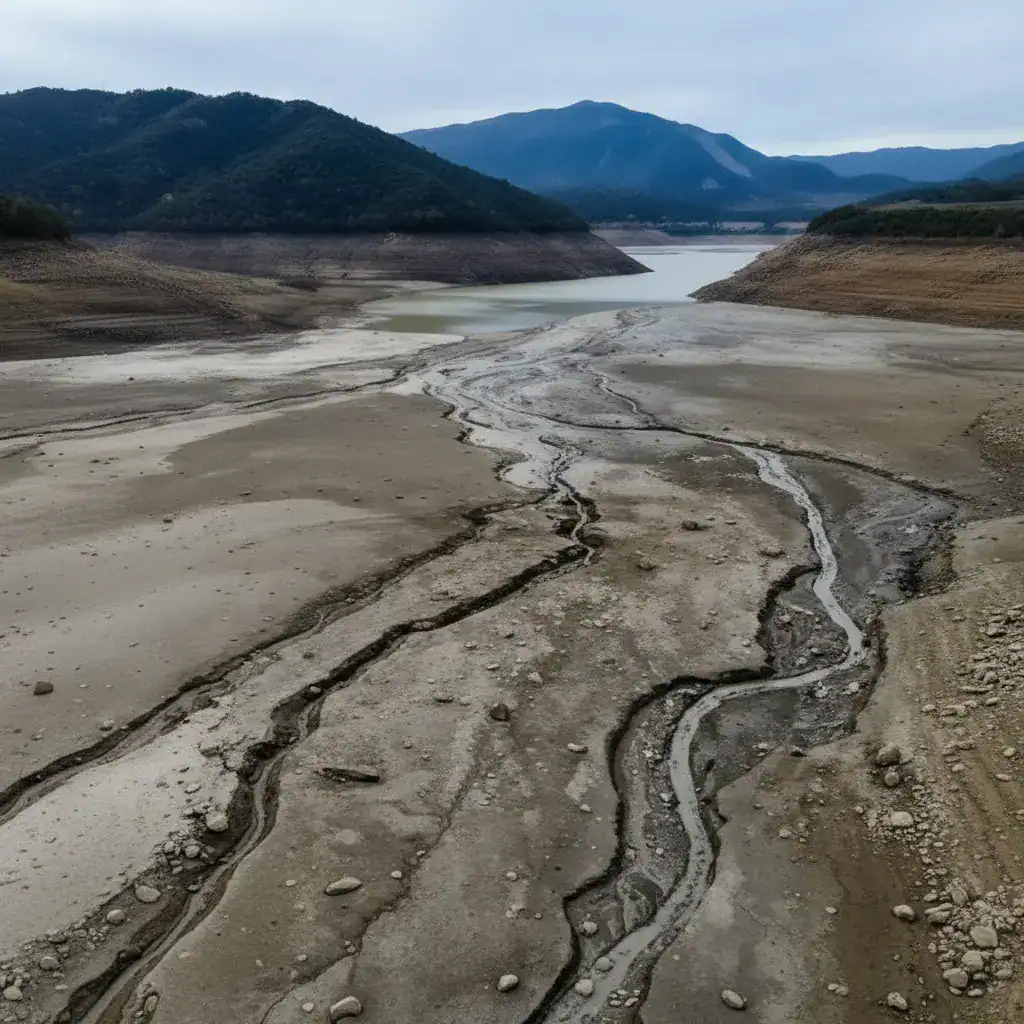
The Athens Water Supply and Sewerage Company (EYDAP) has issued a stark warning to the Ministry of Environment, highlighting a dramatic and concerning decline in reservoir levels. The Mornos reservoir, a primary water source for Athens, currently holds a mere 160.6 million cubic meters of water. This figure represents a alarming 40 percent drop compared to the previous year. Across all four of EYDAP’s reservoirs, the total water reserves have plummeted by nearly 37 percent, signaling a critical situation for the capital’s water security.
Emergency Powers to Expedite Critical Infrastructure Projects
An emergency declaration is deemed crucial by authorities as it would enable them to bypass time-consuming bureaucratic processes. This fast-tracking mechanism would facilitate the rapid approval of necessary studies, the awarding of contracts, and the swift implementation of vital infrastructure projects. The Greek government intends to activate special procedures, previously employed during recent disaster-response efforts, with the explicit goal of stabilizing regions at risk of what officials are now terming a “hydrological collapse.”
The ‘Evrytos’ Project: A €500-Million Lifeline
Central to the proposed response is the ambitious €500-million “Evrytos” project. This significant undertaking involves the diversion of water from two rivers located in central Greece towards the Evinos reservoir. Concurrently, the project aims to upgrade substantial portions of the country’s existing water network, thereby enhancing its resilience and efficiency. Additionally, authorities are actively exploring the feasibility of deploying desalination units in several coastal areas. However, the considerably higher cost of desalinated water compared to traditional sources presents a significant challenge in this regard.
Climate Change and Increased Consumption Exacerbate Crisis
The current strain on Greece’s water resources is not an isolated incident but rather a clear manifestation of broader climate-related stress. Official data indicates a substantial reduction in rainfall across the affected regions, with an approximate 25 percent decrease. Concurrently, evaporation rates have risen by 15 percent, further depleting water reserves. Compounding these environmental factors, overall water consumption has seen an increase of about 6 percent, putting additional pressure on already strained supplies. In response to these challenges, the regulator is expected to finalize new water pricing policies by the end of the year. This decision is anticipated to be a cornerstone of the country’s long-term water management strategy, aiming to encourage more sustainable water use.
Future Outlook: Addressing a Growing Environmental Challenge
The impending emergency declaration for Attica underscores the urgent need for comprehensive and adaptive water management strategies in Greece. As climate change continues to impact weather patterns and water availability, the measures taken in the Athens region and other affected islands will serve as a critical test case for the nation’s ability to safeguard its vital water resources. The long-term success of initiatives like the ‘Evrytos’ project and the implementation of new pricing structures will be crucial in mitigating the effects of future water shortages and ensuring the sustainability of water supplies for its citizens.
Source: https://www.dnews.gr/eidhseis/news-in-english/558912/regulator-urges-emergency-measures-for-athens-region-over-water-shortage