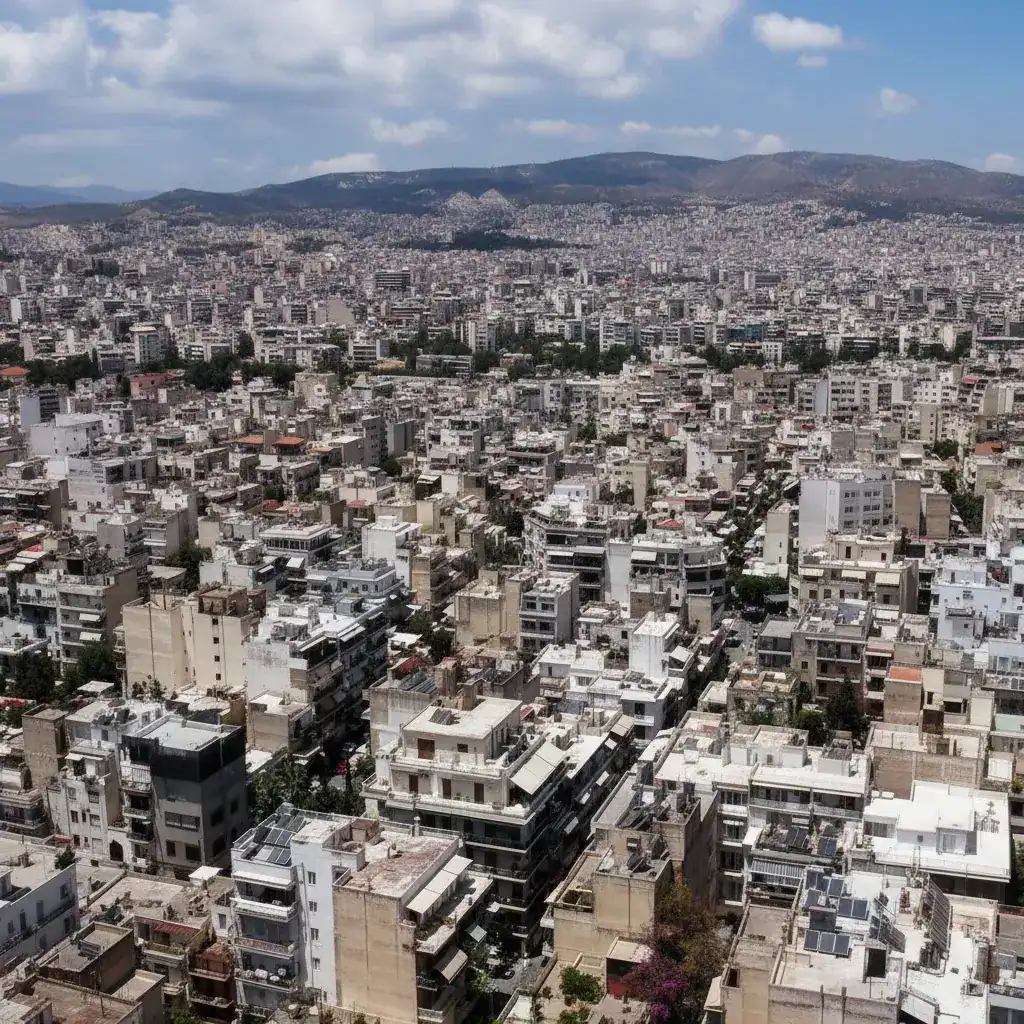
Continued Surge in Greek Property Market
Athens, November 26, 2025 – The Greek real estate market continues its upward trajectory, with apartment prices registering a significant increase in the third quarter of 2025. Data released by the Bank of Greece indicates a 7.7% rise in apartment prices across the country during this period. Major urban centers, particularly Athens, led this growth, recording a substantial 9.6% increase.
Athens Leads the Way with Nearly Double-Digit Growth
The capital city, Athens, demonstrated the most robust growth, with apartment prices escalating by 9.6%. Thessaloniki followed closely with an 8.9% increase. This trend underscores the strong demand and investment interest in Greece’s largest cities. The Bank of Greece’s report highlights that this surge builds upon the momentum from 2024, when apartment prices nationally increased by an average annual rate of 9.1% (revised data), following a 13.9% increase in 2023.
New vs. Old Apartments: A Closer Look
A detailed analysis based on property age reveals distinct trends. For new apartments, defined as those up to five years old, the annual rate of price change in Q3 2025 was 6.6%. Conversely, older apartments, those over five years old, saw a more substantial increase of 8.5%. This suggests a stronger demand for established properties or perhaps a greater renovation potential driving up prices for older units.
Looking back at the revised figures for 2024, the average annual growth rate for new apartments stood at 10.2%, a slight deceleration from the 12.9% recorded in 2023. For older apartments, the average annual growth rate in 2024 was 8.3%, a decrease from the 14.5% seen in 2023. These figures indicate a normalization of growth rates compared to the exceptionally high increases observed in 2023.
Regional Price Dynamics
Geographical distribution of price increases in Q3 2025, compared to the corresponding quarter of 2024, shows varied performance across different regions:
- Athens: 6.6%
- Thessaloniki: 9.6%
- Other Major Cities: 8.9%
- Other Areas of the Country: 8.5%
It is important to note that for the entirety of 2024, the price increases in these same regions, relative to 2023, were 8.5% for Athens, 11.7% for Thessaloniki, 7.5% for other major cities, and 10.9% for the remaining areas (revised data). The discrepancy in Athens’ Q3 2025 quarter-on-quarter growth (6.6%) versus its overall 2024 annual growth (8.5%) and its leading role in the national Q3 2025 growth (9.6% for Athens specifically, as highlighted in the headline and initial data) suggests a strong acceleration within the third quarter itself, particularly when considering the national average increase of 7.7% for the same period.
Overall Urban Area Trends
For all urban areas across Greece, apartment prices in Q3 2025 were, on average, 7.7% higher compared to Q3 2024. The average annual increase for 2024 for all urban areas was 8.7%. These consistent increases underscore a robust and resilient housing market despite global economic uncertainties.
Factors Contributing to the Price Surge
Several factors are believed to be contributing to the sustained increase in apartment prices. Strong domestic demand, fueled by a recovering economy and low interest rates, plays a significant role. Additionally, foreign investment, particularly through programs like the Golden Visa, continues to channel capital into the Greek real estate sector. The limited supply of new, modern housing units in prime urban locations also exerts upward pressure on prices. Furthermore, the appeal of Greece as a tourist destination and a growing hub for digital nomads has increased demand for both rental and purchased properties, especially in popular areas like Athens and Thessaloniki.
Outlook for the Greek Real Estate Market
Experts anticipate that the Greek real estate market will continue to exhibit positive trends, albeit potentially with more moderate growth rates in the coming quarters. The government’s ongoing efforts to streamline property transactions and attract further investment are expected to provide continued support. However, potential challenges such as rising construction costs and evolving global economic conditions could influence future market dynamics. The Bank of Greece will continue to monitor these developments closely to provide accurate assessments of the market’s health.
The current data reaffirms the attractiveness of Greek real estate as an investment, particularly in key urban centers, and signals a period of sustained growth for the sector.
Source: businessnews.gr