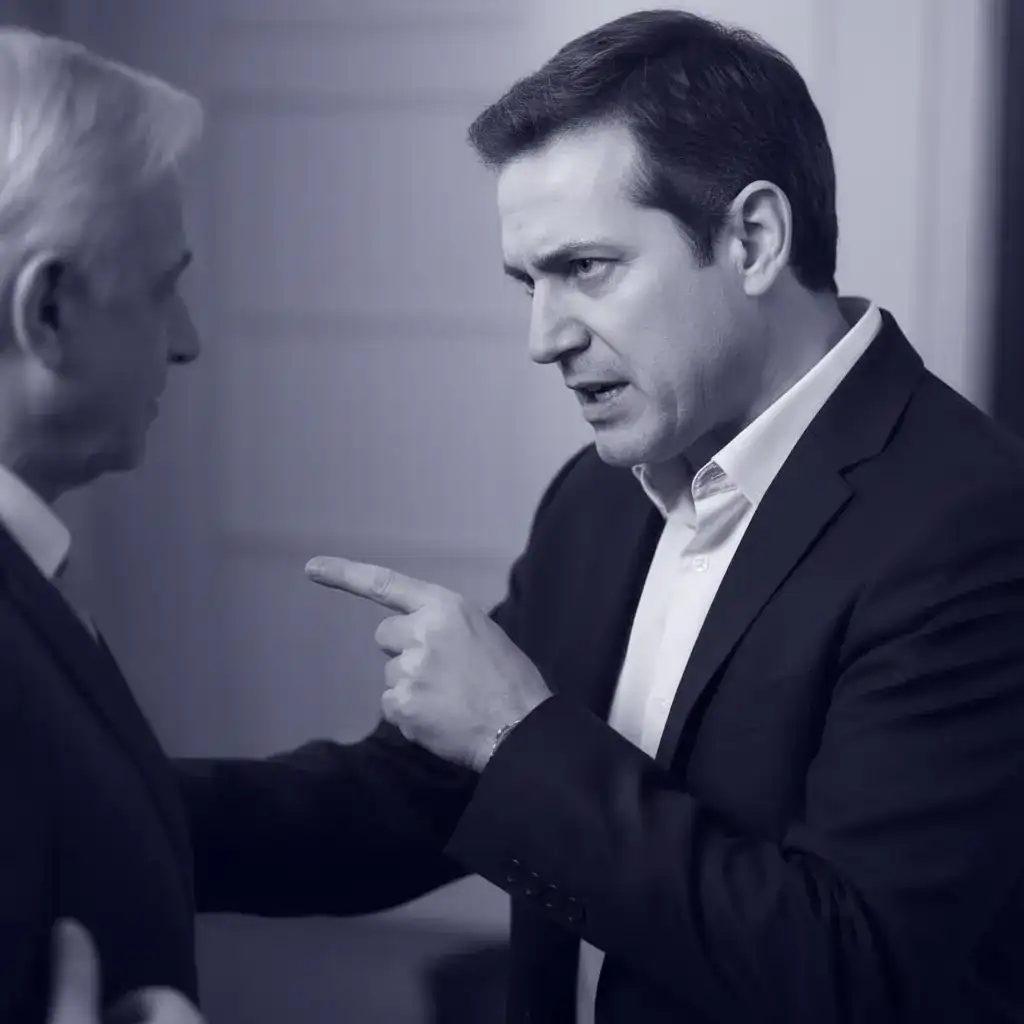
The recent revelations from Alexis Tsipras’s book ‘Ithaca’ offer a fascinating, almost revisionist, perspective on the tumultuous events of December 2008 in Athens, following the tragic murder of Alexandros Grigoropoulos. Tsipras’s ‘dithyramb’ about Prokopis Pavlopoulos, then Minister of Public Order, not only recontextualizes a period of national upheaval but also sheds light on the unexpected personal and political alliances forged in the crucible of crisis. This account challenges conventional narratives and forces a re-evaluation of the leadership dynamics during one of Greece’s most volatile modern episodes.
The Unfolding Crisis: A City in Flames and a Rising SYRIZA
As Tsipras recounts, the murder of 16-year-old Alexandros Grigoropoulos on December 6, 2008, by a police officer ignited an inferno of rage across Athens, and indeed, much of Greece. The unrest, characterized by barricades, widespread destruction, and clashes, was not confined to the usual circles of the left-wing and anarchist movements. Instead, it swelled into a broader youth rebellion, with schools closing and students, often accompanied by parents, taking to the streets in massive, sometimes violent, protests. This period, as Tsipras emphasizes, was pivotal for SYRIZA, which was then experiencing a ‘meteoric rise in the polls’ and had cultivated a ‘youthful, radical, and disruptive’ image. The party found itself in a delicate position, attempting to differentiate itself from the violence while simultaneously refusing to condemn the broader demonstrations of protest.
The political and media environment quickly intensified, with accusations, notably from Aleka Papariga of the Communist Party (KKE), that SYRIZA was tolerating and even fueling the ‘troublemakers.’ This, Tsipras suggests, was a calculated move to halt SYRIZA’s rapid ascent and inadvertently provided a ‘first-class helping hand’ to the then-Karamanlis government. Yet, despite the immense pressure and the initial uncertainty, the government managed to navigate the crisis without ‘irreparable damage,’ a feat Tsipras attributes significantly to one individual.
Pavlopoulos’s ‘Level-Headed Stance’: A Counter-Narrative
It is here that Tsipras introduces Prokopis Pavlopoulos, the then Minister of Public Order, as a figure of remarkable composure and restraint. In stark contrast to ‘extreme recommendations that even called for the army to be deployed on the streets,’ Pavlopoulos adopted a ‘level-headed stance.’ Tsipras, who was in daily communication with Pavlopoulos during those fiery days, highlights the latter’s background as a professor of Public Law at the Athens Law School. This academic grounding, Tsipras implies, provided Pavlopoulos with a unique understanding of ‘youthful impulsiveness’ and an ability to engage with various segments of the extra-parliamentary Left and the anarchist scene.
The excerpts from ‘Ithaca’ reveal a surprisingly intimate and trusting relationship that developed between the two men. Pavlopoulos, according to Tsipras, was ‘sincerely intent on avoiding the worst – namely, preventing the violence from escalating into completely uncontrollable forms that would lead to more victims and greater destruction.’ This shared objective, amidst the chaos, fostered a ‘relationship of honesty, mutual respect, and meaningful communication,’ a bond so profound that, years later, it would inform Tsipras’s decision to propose Pavlopoulos for the position of President of the Republic.
Beyond the Flames: A Legacy of Unexpected Alliances
This account from Tsipras is more than just a historical recollection; it’s a commentary on the nature of leadership, crisis management, and the possibility of finding common ground across political divides. It suggests that even in moments of extreme polarization, an individual’s character and commitment to preventing further harm can transcend ideological barriers. Pavlopoulos’s role, as depicted by Tsipras, was not merely that of a government official but of a statesman who prioritized de-escalation and dialogue over confrontational tactics.
The 2008 riots, while a dark chapter in modern Greek history, also served as a crucible for political evolution. For SYRIZA, it was a period that solidified its identity as a force connected to youth movements, albeit with the challenge of managing the perception of radicalism. For Tsipras, it was an opportunity to observe and engage with a political adversary whose approach to crisis management he deeply respected. The ultimate outcome of this unexpected rapport was Pavlopoulos’s nomination for the presidency, a decision that underscored the depth of the trust and mutual regard that had developed between them during those critical days in Athens.
The ‘Ithaca’ revelations invite us to consider the complexities of political relationships and the often-unseen negotiations that occur behind the scenes during periods of national crisis. They remind us that history is rarely monochromatic and that even in the most charged environments, individuals can rise above partisan divides to seek common solutions. The 2008 Athens riots, viewed through Tsipras’s lens, become not just a story of urban unrest but also a testament to the unexpected human connections that can emerge from the ashes of conflict.
Source: https://en.protothema.gr/2025/11/25/tsipras-dithyramb-about-prokopis-pavlopoulos-the-level-headed-minister-of-public-order-and-the-burning-athens-of-2008/